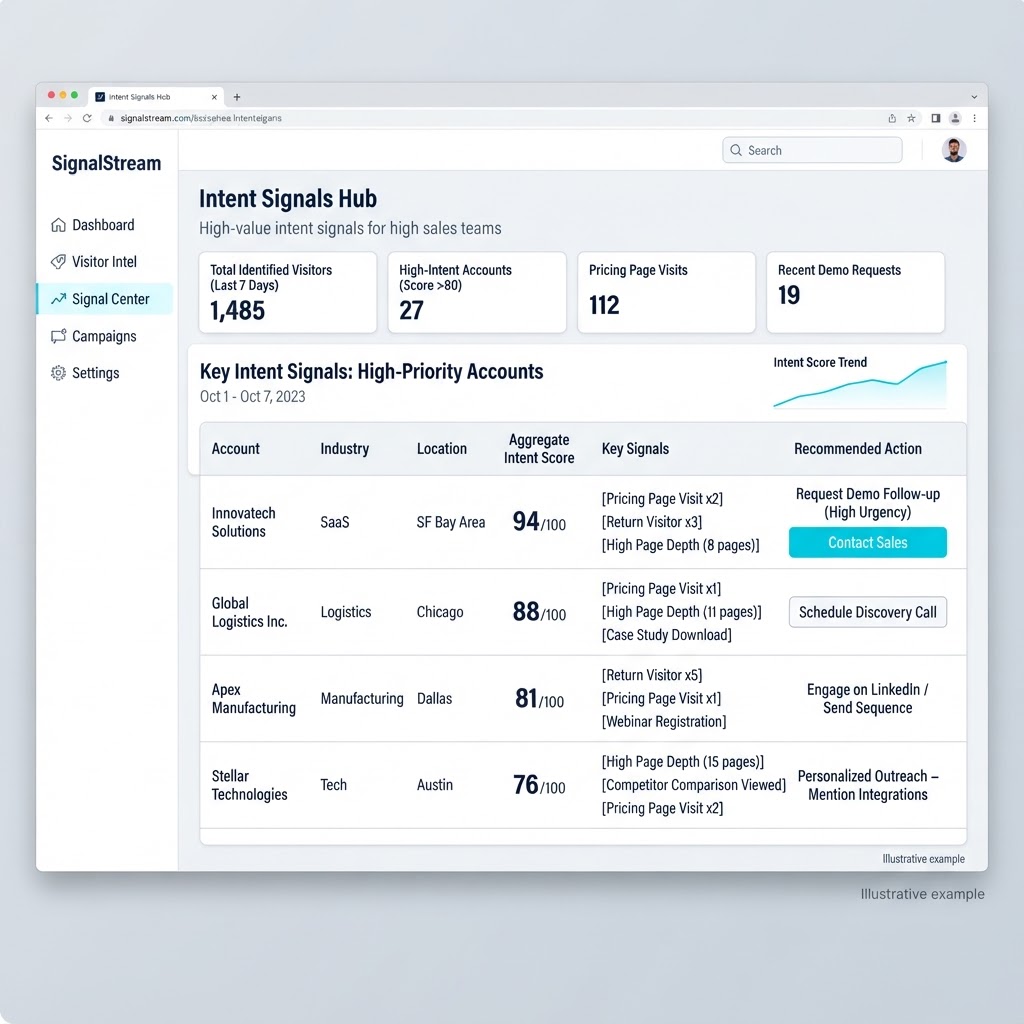
Your Website Is Generating Buying Signals 24/7
Your website is producing buying signals around the clock. The problem isn't a lack of data — it's that without the right tools, that data is invisible. Here are the five highest-value first-party intent signals, why they matter, and exactly how to act on each one.
Signal 1: Pricing Page Visits with High Dwell Time
If someone spends more than 90 seconds on your pricing page, they're not window shopping. They're building a business case. They're comparing plans, calculating ROI, and figuring out what to tell their manager. This is the hottest signal on your entire website — and most teams have no system for acting on it in real time.
How to act on it: Configure Upvert to trigger an exit-intent pop-up on the pricing page offering a personal demo or a direct path to talk to sales. Simultaneously, push an alert to your Slack so the right SDR can follow up within the hour.
Signal 2: Return Visits Within 7 Days
A single visit is curiosity. A second visit within a week is active evaluation. Research consistently shows that B2B buyers visit vendor websites multiple times before initiating contact — and the window between a return visit and a competitor demo is narrow.
How to act on it: Use Upvert's behavioral targeting to show returning visitors different content than first-timers. Instead of a generic welcome message, show them a case study relevant to their industry, or a comparison guide that positions you favorably against alternatives they're evaluating.
Signal 3: Multiple Employees from One Company
When three or more people from the same organization visit your site within a 30-day window, a buying committee has formed internally. This is one of the most powerful signals in B2B sales — it means a deal is being socialized and evaluated at multiple levels of the organization.
How to act on it: Upvert aggregates visitor data at the company level. When you see buying committee signals, trigger an account-based outreach sequence immediately. Don't wait for an inbound form fill that may never come.
Signal 4: Integration and Documentation Page Browsing
Technical buyers who dig into your API documentation, integration library, or developer resources aren't casually browsing — they're evaluating technical feasibility for an active purchase. This signal often predicts enterprise deals, where technical validation happens before sales conversations.
How to act on it: Configure a targeted pop-up on docs and integration pages offering a technical walkthrough or sandbox access. Show these visitors developer testimonials and integration use cases specific to their tech stack.
Signal 5: High-Scroll Case Study Consumption
A buyer who reads a case study all the way to the bottom is building internal justification. They're looking for a story they can retell to their team or manager. Companies with similar profiles, similar problems, and quantifiable results are what they need.
How to act on it: Follow up case study engagement with a pop-up or microsite that surfaces the most relevant proof for that visitor's specific company profile — matched by industry, company size, or use case through Upvert's de-anonymization layer.
Every one of these signals is happening on your site right now. The question is whether you're reading them — and whether you're fast enough to act before your buyer moves on.
Get started with Upvert for free today and unlock 250 leads — visit upvert.io/pricing to begin.