The Intent Data Debate That's Missing the Point
Intent data is one of the most debated topics in B2B marketing — and most of the debate misses the most important question: whose data is it, and how fresh is it?
In 2025, the intent data landscape has been fundamentally reshaped by the deprecation of third-party cookies, increasing privacy regulation, and the rise of AI-powered personalization that requires high-quality signals to function. Understanding the difference between first-party and third-party intent isn't just academically interesting — it determines whether your outreach lands or gets ignored.
Third-Party Intent: The Limitations You Need to Know
Third-party intent data is collected by aggregators who track keyword searches, content consumption, and digital behavior across a network of publisher sites. Tools like Bombora and G2 Buyer Intent fall into this category. They tell you that a company has been searching for solutions in your category based on activity across their publisher network.
The problems with this approach have become harder to ignore. The same intent signal is sold to every vendor who wants it — if an aggregator knows a company is researching your category, so does every one of your competitors. Third-party data is typically aggregated weekly or monthly, meaning by the time your SDR calls, the buyer may have already made a decision. With VPN usage rising and cookies disappearing, coverage is shrinking and match rates are declining industry-wide. And third-party intent tells you a company is in-market, but not which specific product they're comparing or where they are in their decision process.
First-Party Intent: The Unfair Advantage
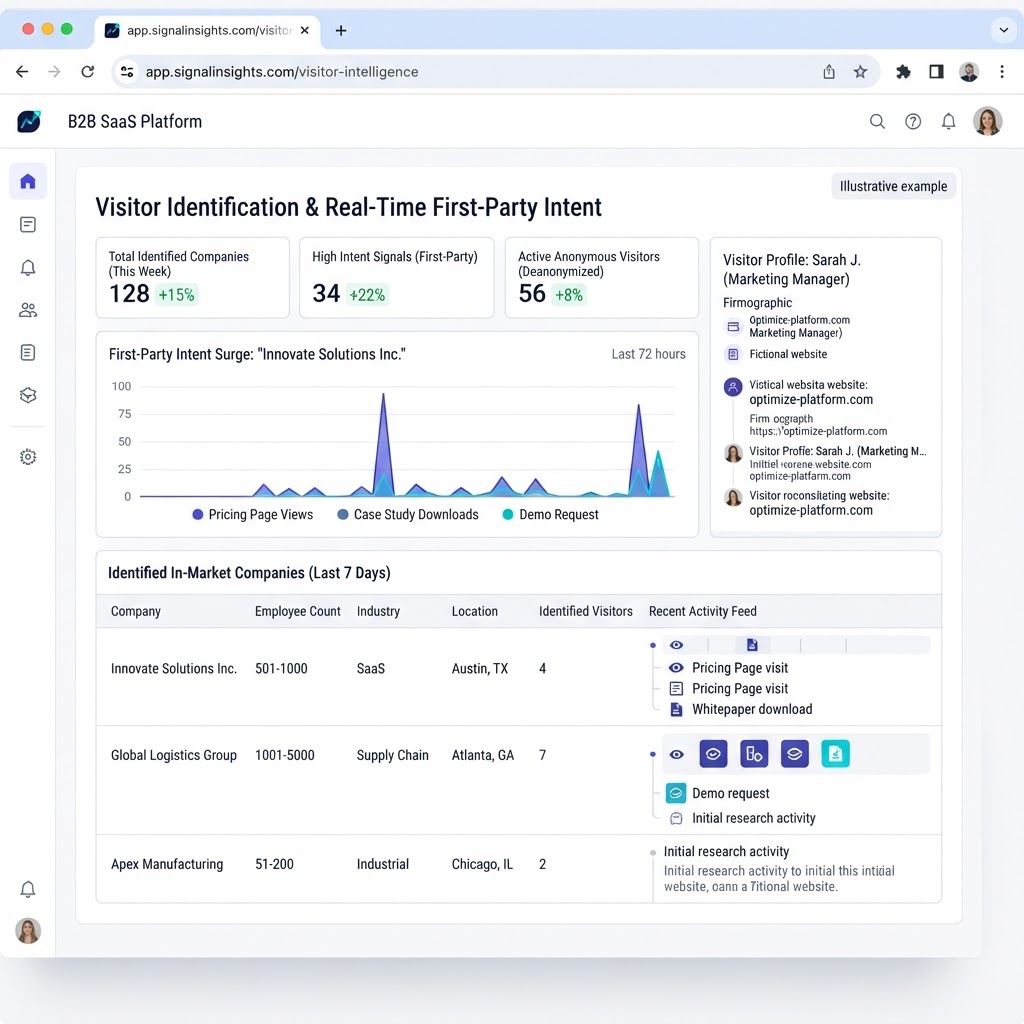
First-party intent is radically different. It's generated by real buyers actively engaging with your specific website. This means it's exclusive — only you have this data. It's real-time — you know the moment a high-value account hits your pricing page. It's context-rich — you know exactly what content they consumed, how long they spent, and how many times they've returned. And it's compliant, operating under your own privacy framework.
The Hybrid Approach That's Winning in 2025
The smartest B2B teams don't choose one or the other — they use third-party intent for broad account prioritization and first-party intent for precise activation. Which companies are in-market? Third-party. Who from those companies is visiting my site right now, and what do they care about? First-party.
Upvert is built specifically for the first-party layer. By combining real-time behavioral signals from your website with Warmly's identity network, Upvert gives you the context you need to personalize the on-site experience, trigger the right pop-up at the right moment, and route hot leads to your team before they move on.
Frequently Asked Questions
Is third-party intent data still worth using in 2025?
Third-party intent data still has value for broad account prioritization — identifying which companies in your total addressable market are showing general in-market behavior. Its value has diminished significantly for precise activation, however, where first-party signals are far more accurate and timely.
What makes first-party intent data more exclusive than third-party?
First-party intent data is generated on your own domain and is visible only to you. Third-party intent data is collected by aggregators and resold to multiple buyers, including your direct competitors. The signal that a company is researching your category is available to everyone — the signal that they're actively on your pricing page is available only to you.
Get started with Upvert for free today and unlock 250 leads — visit upvert.io/pricing to begin.