2026 Website De-Anonymization Benchmark Report: Identification Rates, Pipeline Impact, and What They Mean for Your Stack
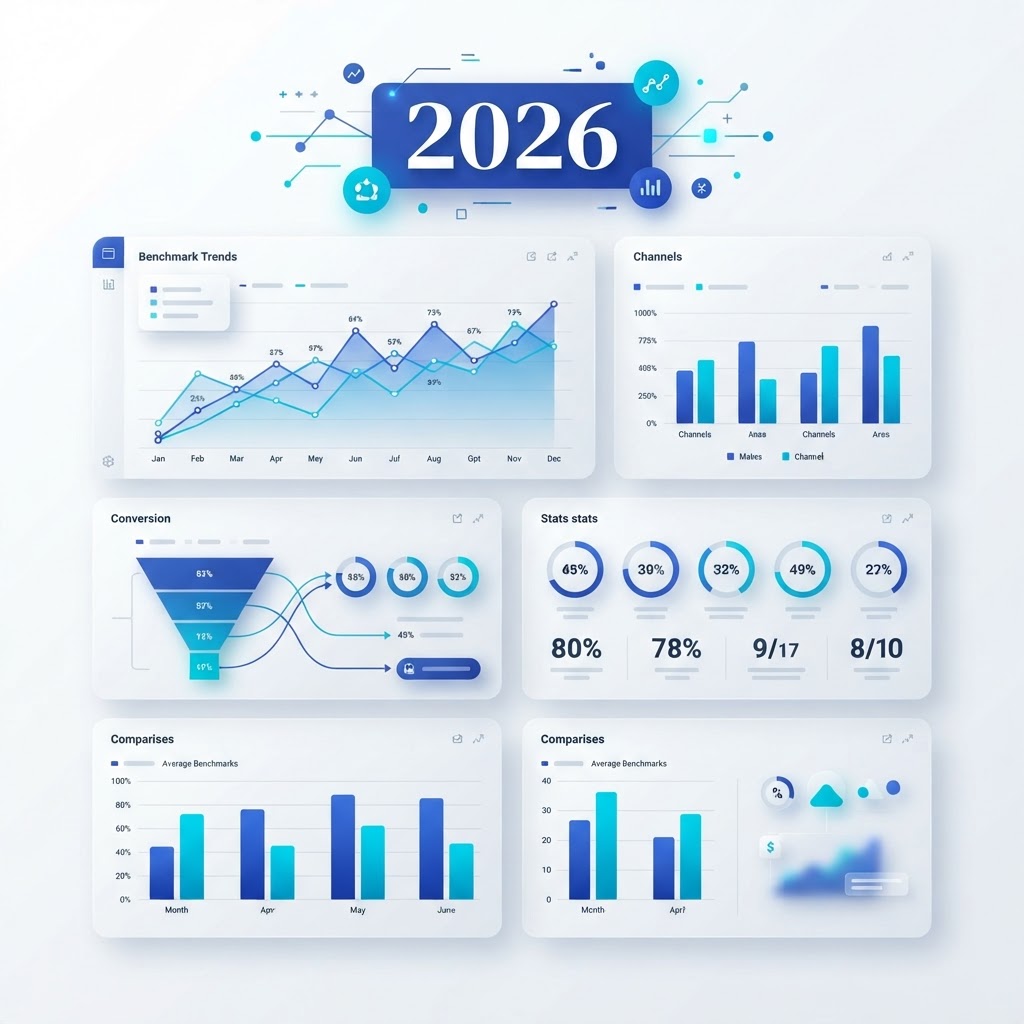
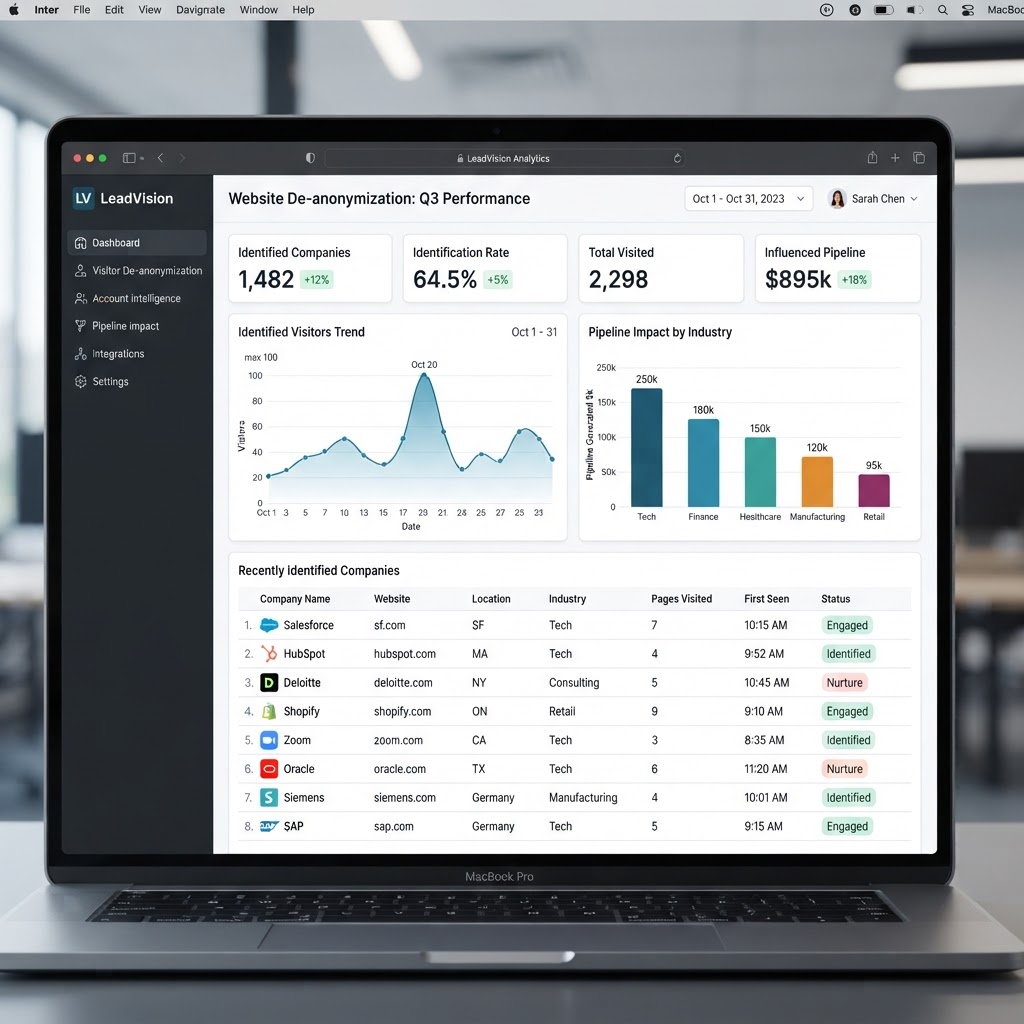
Quick answer: A 2026 analysis spanning 850+ B2B companies found average visitor identification rates of 38%, surfacing 15–40 previously invisible qualified accounts per month and generating an average $284,000 in incremental annual pipeline per company — a 12–18x return on de-anonymization technology spend. For B2B marketing and RevOps teams, the data confirms that identification alone isn't the bottleneck anymore; what you do with an identified visitor in the next 60 seconds is.
Roughly 96% of B2B website visitors never fill out a form. That statistic hasn't moved much in years, but what teams do with the remaining anonymous 96% has changed considerably as website de-anonymization technology has matured. Here's what the latest 2026 benchmarking shows, and how to read it against your own numbers.
Identification Rates Are Higher Than Most Teams Assume
Company-level identification now commonly lands between 20% and 40% globally, depending on tool, traffic source, and region. The 850-company study cited above found a 38% average identification rate — meaningfully higher than the 15–20% many marketing teams still budget for when building their business case. The gap matters: at 20% identification, a site with 10,000 monthly visitors surfaces 2,000 identified sessions; at 38%, that's 3,800 — nearly double the addressable pipeline from the same traffic.
Remote Work Is Reshaping Match Rates
One trend worth flagging for 2026 planning: with 60%+ of knowledge workers now remote or hybrid, a large share of B2B traffic no longer originates from identifiable corporate IP ranges. This is pushing the identification market toward blended methods — IP/firmographic matching combined with person-level identity resolution (the approach Upvert uses via its Warmly partnership) — because IP-only tools are structurally losing coverage as home-network browsing increases.
Pipeline Impact: The $284K Number, Explained
The average $284,000 in incremental annual pipeline reported in the benchmark comes from converting previously anonymous, already-engaged traffic — visitors who read pricing pages, compared plans, or returned multiple times without ever submitting a form. Rather than net-new demand, this is recovered pipeline: intent that already existed but was invisible to sales and marketing. Teams that pair identification with intent-triggered popups or personalized microsites convert a higher share of that recovered pipeline than teams using identification data purely for CRM enrichment.
ROI Is Concentrated in Action, Not Just Visibility
The 12–18x ROI range in the benchmark is wide, and the spread correlates closely with whether companies acted on identification in real time versus batch-exporting lead lists for manual follow-up days later. Teams triggering popups or routing to personalized landing experiences within the same session captured the top end of that range; teams treating de-anonymization as a passive reporting layer landed closer to the bottom.
What This Means for Your 2026 Planning
If your current identification rate is below 25%, it's worth auditing whether your tool relies solely on IP matching — you're likely losing a growing share of remote and mobile traffic. If you're already identifying visitors but not seeing proportional pipeline lift, the gap is probably in activation, not identification: pairing de-anonymization with real-time triggered content closes that gap faster than adding a second identification vendor.
What counts as a "good" de-anonymization match rate in 2026?
Anything above 30% is competitive for US-heavy B2B traffic; rates above 35% typically indicate a blended company- and person-level approach rather than IP matching alone.
Why do remote workers reduce identification accuracy?
IP-to-company matching relies on corporate network ranges. Visitors browsing from home ISPs or mobile carriers don't resolve to a business IP block, so tools relying solely on this method miss an increasing share of traffic as remote work grows.
Is de-anonymization pipeline "new" revenue or recovered revenue?
Mostly recovered. It surfaces intent and engagement that already existed in your traffic but was previously invisible to sales and marketing teams.
Does identification alone drive the ROI, or does activation matter more?
Activation matters more. Benchmark data shows the highest ROI multiples among teams that trigger real-time popups or personalized pages off identification, not those using it solely for reporting.
How quickly can a team expect to see pipeline impact?
Most companies see measurable pipeline influence within 30 to 60 days of implementation, once enough repeat-visitor history builds in the identity graph.
Curious what your own identification rate and recoverable pipeline could look like? Book a demo to benchmark your traffic against these 2026 figures.