2026 B2B Website Conversion Benchmarks: What Top Sites Do Differently
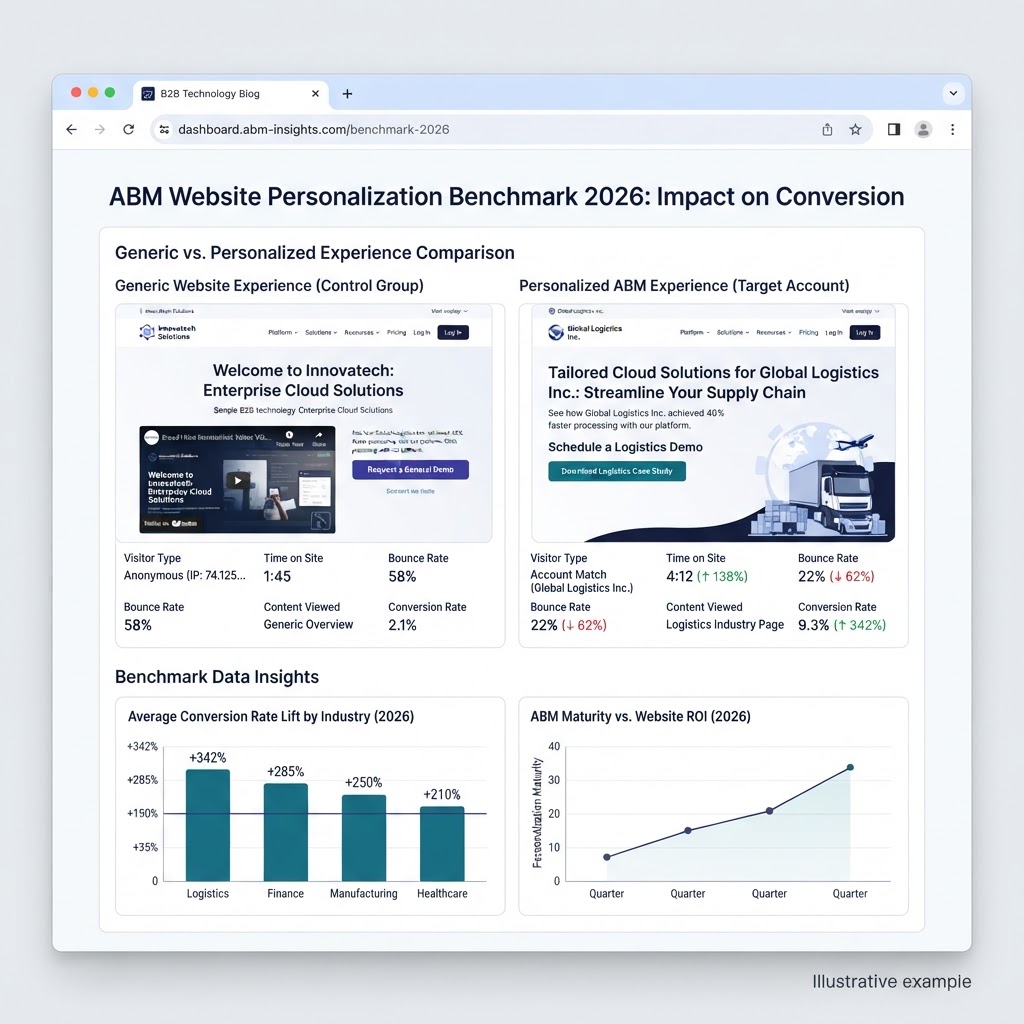
The average B2B website converts at 2.9% in 2026, down from 3.2% in 2024 as competition and buyer caution increase — but sites using personalization, de-anonymization, and intent-triggered engagement consistently outperform that baseline, with tailored experiences driving 15–25% conversion improvement and targeted CTAs converting up to 202% better than generic ones. The gap between average and top-performing B2B sites is now driven almost entirely by relevance, not traffic volume.
Every year the average B2B conversion rate gets more sobering, and every year the gap between average and top-performing sites gets wider. 2026 is no exception. The data below pulls from recent industry benchmark research to answer the question every B2B marketing leader is asking: what are the top-performing 10% actually doing differently?
The State of B2B Conversion in 2026
The overall average is declining because buyers are researching longer and more skeptically before engaging a vendor directly — often, as covered in our related post on first-party intent data, doing much of that research through AI tools before ever landing on a page a traditional analytics stack can see. That makes the moment a buyer does land on your site higher-stakes than ever.
What Separates Top-Performing Sites
Three levers show up consistently across the highest-converting B2B sites in 2026 benchmark research:
1. Personalized, Not Generic, Experiences
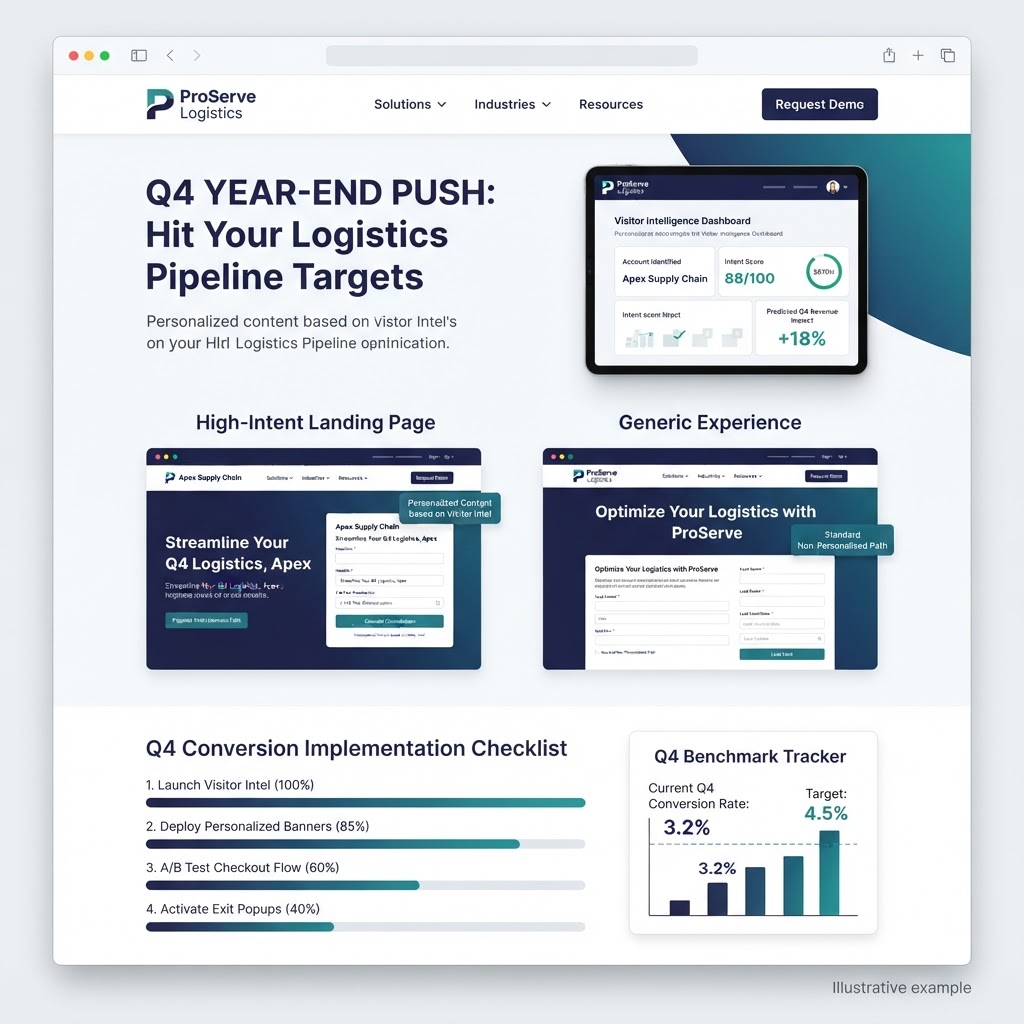
B2B websites implementing tailored experiences see an average 19% conversion improvement, with dedicated landing pages achieving up to 25% gains. Geo- and industry-personalized hero content — a headline referencing the visitor's industry or region instead of a generic value prop — lifts conversion by roughly 11% on its own, and returning-visitor personalization lifts SaaS free-trial conversion by around 13%. None of this requires a website rebuild; it requires knowing who's on the page, which is precisely what website de-anonymization and personalized microsites are built to do.
2. Targeted Calls-to-Action
An analysis of over 330,000 CTAs found that targeted, context-specific calls-to-action convert 202% better than generic "Learn More" or "Contact Us" buttons. The difference isn't the button design — it's whether the CTA reflects what the visitor has already shown interest in, which is exactly the logic behind intent-triggered popups that fire based on page depth, scroll percentage, and account-tier targeting rather than a blanket timer.
3. Acting on Intent Signals in Real Time
83% of B2B marketing and RevOps practitioners now call intent data essential or important to their personalization strategy, and teams using intent signals identify in-market accounts 2.4x faster than teams relying on firmographic data alone. But only 30% of marketing leaders say their martech stack is actually meeting their needs — and data integration, not data availability, is the single biggest barrier practitioners cite. The sites converting above benchmark are disproportionately the ones that closed that integration gap.
Benchmark Comparison by Conversion Type
| Conversion type | Average rate | Top-performer range |
|---|---|---|
| Overall website conversion | 2.9% | 5–8% |
| Demo requests | 1.8% | 3–5% |
| Free trial signups | 3.2% | 6–10% |
| Content downloads | 5.1% | 8–12% |
The Widening Expectation Gap
Underlying all of this is what recent industry research frames as an "expectation gap": B2B buyers now carry consumer-grade personalization expectations — the kind they get from Amazon or Netflix — into evaluating six-figure software purchases, and most B2B websites don't come close to meeting that bar. Closing that gap is less about redesigning a site from scratch and more about layering identity, personalization, and timely engagement onto the traffic already arriving.
Frequently Asked Questions
The average B2B website converts at 2.9% overall, with SaaS companies typically at 3–5%. Top-performing sites using personalization and intent-based targeting reach 5–8% or higher, roughly double to triple the average.
Average B2B conversion rates dropped from 3.2% in 2024 to 2.9% in 2026, driven by increased competition and more cautious buyers who research longer — often through AI tools — before engaging a vendor directly, reducing the volume of high-intent direct site visits relative to total traffic.
Tailored, personalized experiences drive an average 19% conversion improvement, with dedicated personalized landing pages achieving up to 25% gains. Targeted CTAs specifically convert up to 202% better than generic ones.
Data integration is the most commonly cited barrier, named by 47% of B2B marketing practitioners — meaning most teams already have access to enough intent and identity signal, but lack the connected infrastructure to act on it in real time.
The gap between average and top-performing B2B websites in 2026 isn't a traffic problem — it's a relevance problem. Identity, personalization, and real-time intent-based engagement are the three levers consistently separating sites converting at 2.9% from sites converting at 6% or more.
See where your site sits against these benchmarks — book a demo or start a free trial of Upvert.