Exit-Intent Popups for B2B: How to Recover High-Intent Visitors Before They Leave
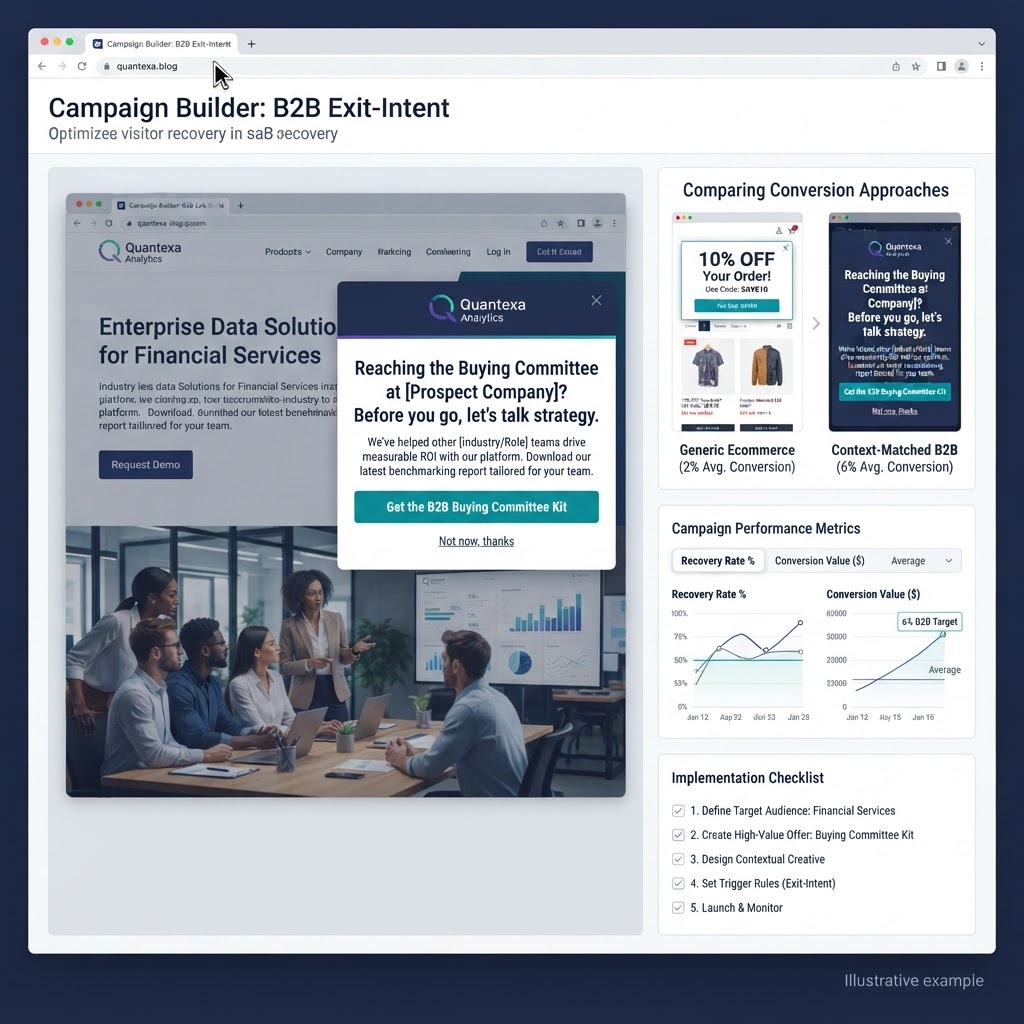
An exit-intent popup detects when a visitor's cursor movement signals they're about to leave the page — typically moving toward the browser's back button, tab bar, or address bar — and triggers a targeted message before they go. For B2B sites, exit-intent popups convert visitors at roughly 6% on average, and when paired with visitor identification, they can be personalized to the account rather than shown generically to everyone.
Why B2B Demand Gen Teams Underuse Exit-Intent
Exit-intent is one of the oldest popup patterns in ecommerce, which is exactly why many B2B marketers dismiss it as a discount-code gimmick that doesn't translate to longer, more considered B2B buying cycles. That's a mistake. A B2B site loses up to 97% of visitors without a form fill on any given session — most of that traffic came from paid ads, outbound, or organic content that took real budget or effort to earn. An exit-intent popup isn't asking a cold stranger to buy; it's giving an already-interested visitor one more relevant reason to stay engaged before the session — and the marketing spend that produced it — is wasted.
What Makes a B2B Exit-Intent Popup Work
Generic exit popups ("Wait! 10% off!") don't fit B2B buying committees evaluating a five- or six-figure purchase. What performs instead:
- Context-matched offers: A visitor who scrolled through pricing gets a popup offering a live demo or a pricing walkthrough — not a discount.
- Content-matched offers: A visitor reading a blog post gets a related gated asset or a "talk to sales" prompt tied to that topic, not a homepage CTA.
- Account-aware messaging: When the visitor is de-anonymized as belonging to a known or target account, the popup can reference their industry or company by name instead of using generic copy.
- Frequency discipline: Capping how often the same visitor sees an exit popup prevents fatigue — Upvert's frequency controls, for example, are built to reduce wasted impressions by up to 80% compared to unthrottled popup campaigns.
How Intent-Triggered Popups Extend Exit-Intent
Exit-intent is one trigger among several. The strongest B2B popup programs combine it with page depth, time-on-page thresholds, scroll percentage, and repeat pricing-page views, so a visitor gets the right message at the right moment rather than only at the last second. Upvert's Smart Popups support all of these triggers together with account-tier targeting, so an exit-intent popup for a target-account visitor can differ from the one shown to an unidentified visitor from the same page — same trigger, different message, driven by who's actually on the page.
What to Measure
Conversion rate is the obvious metric, but it isn't the only one that matters. Track popup-attributed pipeline and revenue, not just form fills — a popup that generates low-quality leads at a high conversion rate is worse than one that generates fewer, better-fit leads. Also watch bounce rate and time-on-site for visitors who see the popup versus those who don't, since an exit-intent popup that annoys visitors into leaving faster is actively working against the goal.
Frequently Asked Questions
What is an exit-intent popup?
An exit-intent popup is a targeted message triggered by cursor behavior that signals a visitor is about to leave the page, such as moving toward the browser's navigation or tab bar.
Do exit-intent popups work for B2B websites?
Yes. B2B exit-intent popups convert at roughly 6% on average when the offer is relevant to the visitor's context — content viewed, pages visited, or account identity — rather than a generic discount.
How is a B2B exit-intent popup different from an ecommerce one?
B2B popups typically offer a demo, a relevant asset, or a sales conversation rather than a discount code, and perform best when personalized to the visitor's account, industry, or on-site behavior rather than shown identically to every visitor.
Can exit-intent popups be personalized by account?
Yes, when paired with website de-anonymization. A visitor identified as belonging to a target or known account can see messaging referencing their company or industry instead of generic copy.
What other triggers should B2B teams combine with exit-intent?
Page depth, time-on-page, scroll percentage, and repeat visits to high-intent pages like pricing are the most common complementary triggers for B2B popup programs.
Want to recover more high-intent visitors before they leave? Start a free trial or book a demo of Upvert's Smart Popups.