B2B Website Personalization Planning for 2027: A Marketing Leader's Checklist
Short answer: When budgets are flat, the cheapest pipeline is the traffic you already pay for. Before adding spend in 2027, baseline how your highest-intent pages convert, identify who is visiting, and fund three things: intent-triggered popups, personalized microsites for priority segments, and measurement that ties each change to pipeline. This checklist walks through each step.
Why Personalization Belongs in the 2027 Plan
Forrester surveyed 377 B2B marketing decision makers for its 2026 planning research and found that 83% expected budgets to rise, but the largest group, 44%, expected increases of only 1% to 4%, which is roughly flat after inflation. Flat budgets mean paid and content spend has to work harder. The place most teams leak value is the website: most visitors never fill out a form, and a generic homepage treats a target account the same as a first-time student.
Website personalization closes that gap by changing what a visitor sees based on who they are and what they are doing. The five steps below are a practical order of operations.
Step 1: Baseline Conversion by Page and Segment
Pull the last 90 days of data for your pricing, demo, product, and comparison pages. Record sessions, demo-request rate, and where visitors exit. Split by source (paid, organic, email) and, if you can, by account tier. Without this baseline you will not be able to prove a lift later.
Step 2: Identify Who Is Actually Visiting
Website de-anonymization resolves anonymous traffic to a company, and sometimes a person, using IP-to-company matching, reverse DNS, and identity-resolution partners. Match rates vary with your audience: remote work, VPNs, and shared networks reduce coverage, so treat any vendor's headline rate as a starting point and test on your own traffic. The goal at this stage is simple: know which target accounts are on your site this week. See match rates explained for what to expect.
Step 3: Put Intent-Triggered Popups on High-Intent Pages
Smart popups fire only when behavior signals interest, instead of interrupting everyone. Common triggers include:
- Repeat views of the pricing page
- Time on a high-intent page
- Scroll depth past a threshold
- Exit intent
- Returning visitors or CRM status (for example, an open opportunity)
Start with two or three popups, such as an account-based demo prompt for target accounts and a lead-capture prompt for everyone else. Upvert's Smart Popups ship with templates for these cases, including exit-intent, account-based demo, and Calendly-based booking.
Step 4: Build Microsites for Priority Segments
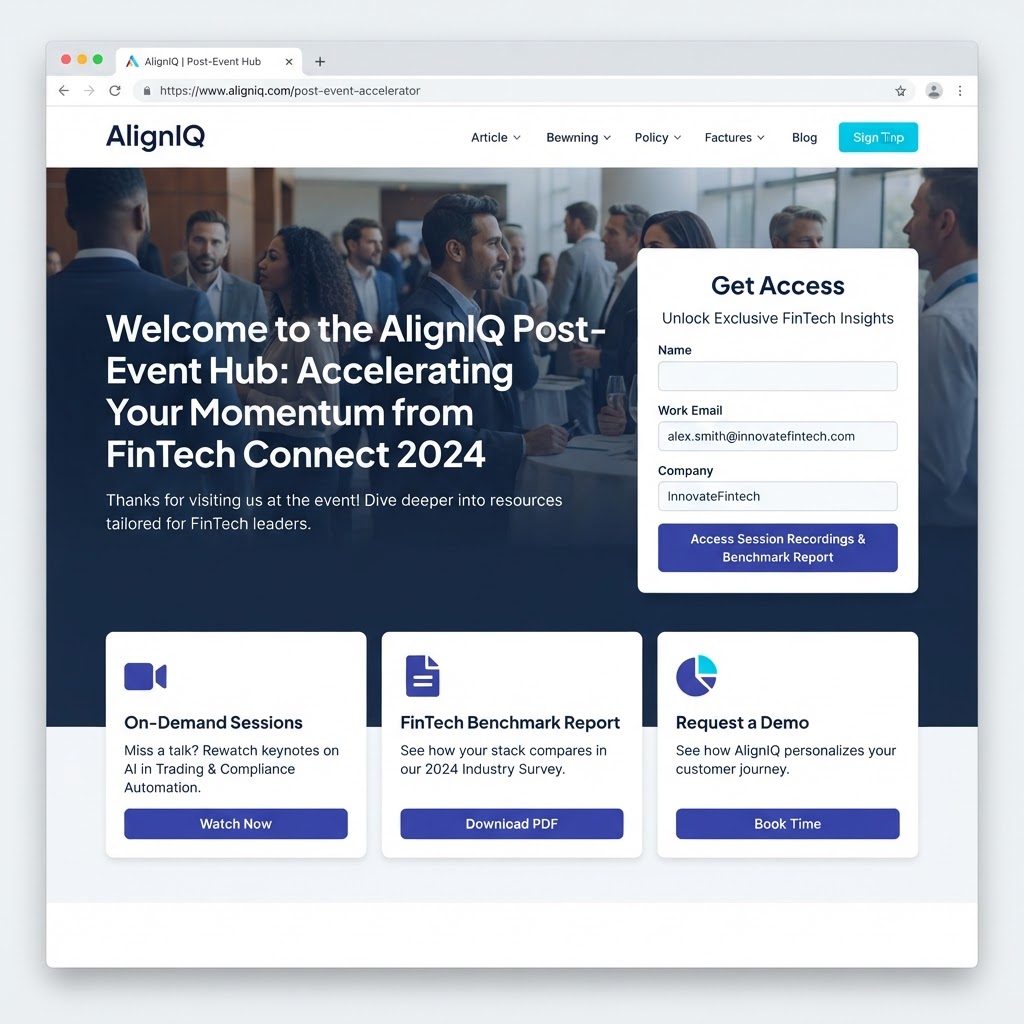
A personalized microsite is a focused page built for one segment or account: its industry, its use case, its language. Use them as destinations for outbound emails, paid campaigns, and post-event follow-up. Pick the three segments that matter most to next year's revenue target and build one microsite for each before expanding. Our post on microsites vs. landing pages covers when each makes sense.
Step 5: Measure What Matters
Track four metrics, split by cohort (personalized vs. not): demo-request rate on key pages, pipeline created from identified accounts, sales-accepted rate, and time from first visit to meeting booked. Review monthly for the first quarter, then quarterly. The RevOps guide to measuring personalization ROI goes deeper on attribution.
A Realistic Rollout Timeline
Teams usually spend the first week on baselines and installation (Upvert goes live in about five minutes), weeks two and three on the first popups and microsite, and the rest of the quarter reading results and expanding what works. Plans start at $99/month with a 14-day free trial, so you can validate before committing 2027 budget.
Frequently Asked Questions
What should B2B marketers prioritize for website personalization in 2027?
Prioritize high-intent pages (pricing, demo, comparison), identify visiting accounts, and add intent-triggered popups and one microsite per priority segment. Measure demo-request rate by cohort.
How do I budget for website personalization?
Start small and prove lift: a low-cost plan with a trial period lets you validate results on your own traffic before expanding. Upvert starts at $99/month.
How long before personalization shows results?
Popups and microsites can be live within days, and most teams can read early conversion differences within the first 30 to 60 days, depending on traffic volume.
Do I need a developer to implement this?
No. Upvert installs with a single snippet in about five minutes, and popups and pages are built in a visual editor.
Ready to plan with real numbers? Book a demo or start your free trial.