Personalized Microsites for Healthcare & Health-Tech Companies
Quick answer: Healthcare and health-tech buying committees typically include clinical, compliance, IT security, and procurement stakeholders who each need different proof points. Personalized microsites let health-tech companies serve a distinct page per segment — health system, payer, provider group, or patient-facing audience — with the compliance details, integrations, and case studies that specific buyer cares about, instead of routing everyone through one generic homepage.
Why Generic Landing Pages Fall Short in Healthcare
A single healthcare B2B landing page has to speak to a hospital CIO worried about HIPAA and EHR integration, a payer evaluating cost-per-member impact, a clinician who wants to know how a tool fits into existing workflow, and a compliance officer scanning for SOC 2 and BAA language — often in the same sales cycle. Generic pages default to the lowest common denominator, which means none of these stakeholders sees the specific proof they need, and deals stall in committee.
How Personalized Microsites Solve This
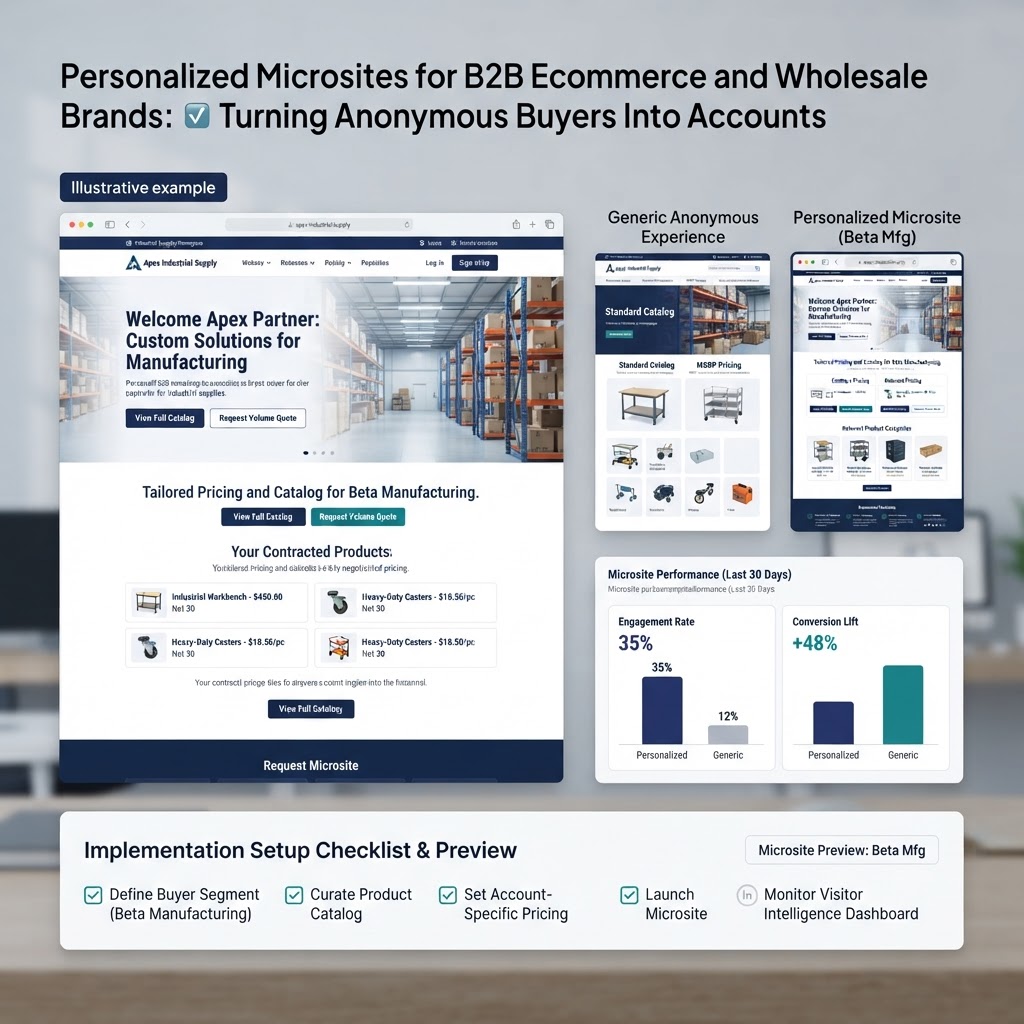
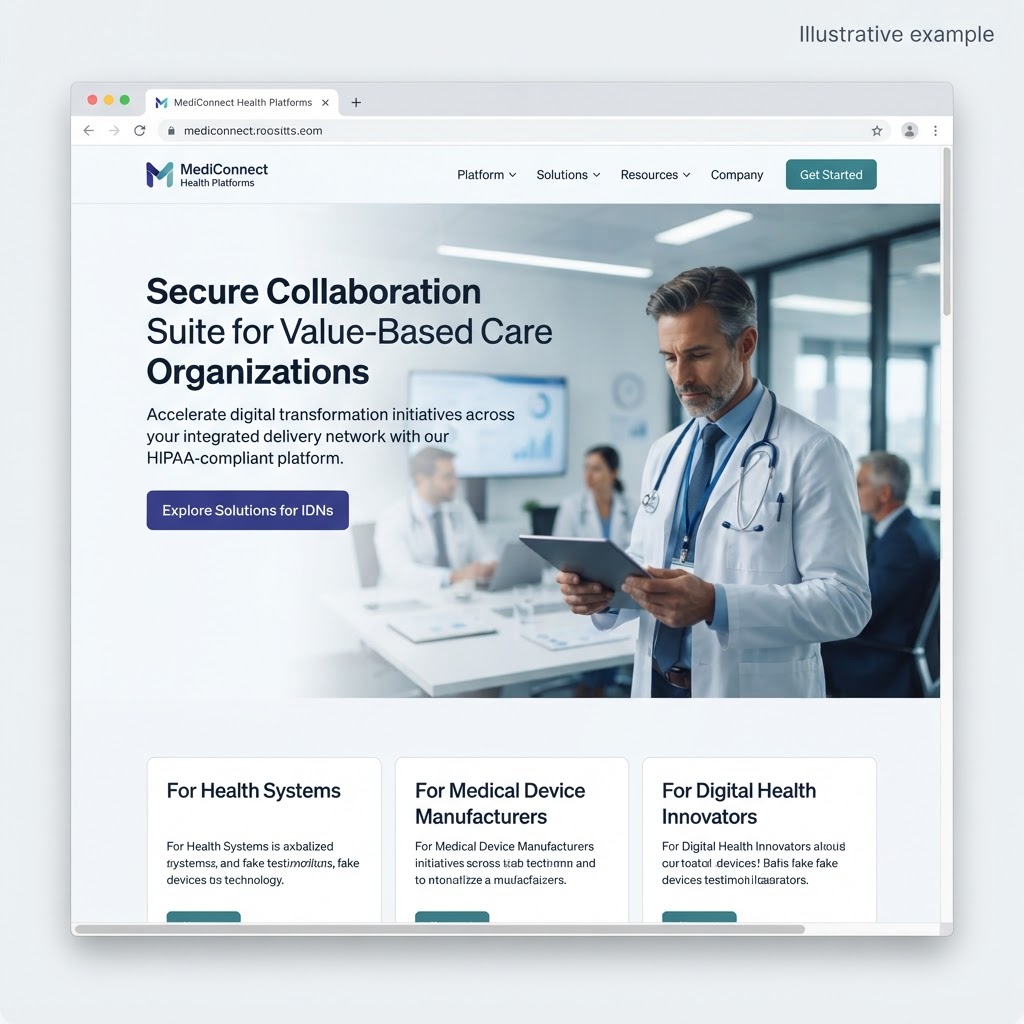
A personalized microsite is a dynamically generated landing page built for a specific account, segment, or campaign, without requiring a developer for every variant. In healthcare, that typically means building segment templates such as:
Health systems: EHR integration details (Epic, Cerner), IT security documentation, and multi-site rollout case studies.
Payers: Cost and outcomes data, population health framing, and member-engagement metrics.
Provider groups: Workflow-fit messaging, clinician testimonials, and implementation timelines.
Patient-facing / PLG audiences: Plain-language benefit statements and trust signals like HIPAA compliance badges.
Paired with website de-anonymization, Upvert can identify which health system or payer organization is browsing your site before the page even personalizes — swapping in the right logo, case study, and compliance language automatically for that account, and triggering a relevant popup if a compliance officer lands on your security page.
What to Personalize First
Start with your top 10–20 target accounts (health systems or payer groups you're actively pursuing) and your two or three highest-volume segments. Most healthcare teams see the fastest lift by personalizing the security/compliance page and the ROI/outcomes page first, since those are the two pages compliance and finance stakeholders scrutinize most before a deal advances.
Measuring Impact
Track microsite performance against three metrics: time-to-first-meeting for accounts that view a personalized page versus a generic one, conversion rate on the compliance/security page specifically, and sales cycle length for deals where a microsite was shared directly with a buying committee member. B2B teams using account-level personalization commonly report meaningfully shorter cycles when compliance and clinical stakeholders get segment-specific proof early, rather than generic marketing copy.
Frequently Asked Questions
Do personalized microsites require rebuilding my whole website?
No. Microsites are built as variants layered on top of your existing site using a visual editor, so your core marketing site and CMS stay untouched while you launch segment- or account-specific pages alongside it.
Is website de-anonymization HIPAA-compliant for healthcare marketing?
De-anonymization identifies the organization (and often a named business contact) visiting your site based on firmographic and IP-level signals — it does not access or process patient health information, so it operates outside HIPAA's PHI scope. Healthcare marketers should still confirm data handling practices align with their organization's compliance policies.
How many microsite variants should a health-tech company start with?
Most teams start with 3–5 templates covering their core segments (e.g., health systems, payers, provider groups) plus a handful of named-account pages for active enterprise deals, then expand from there.
Can microsites integrate with our CRM?
Yes. Upvert syncs with HubSpot natively and sends data to Salesforce, Outreach, and Apollo via webhooks, so microsite engagement shows up alongside the rest of your pipeline data.
See how healthcare and health-tech teams personalize the buyer journey — book a demo or explore Upvert Microsites.