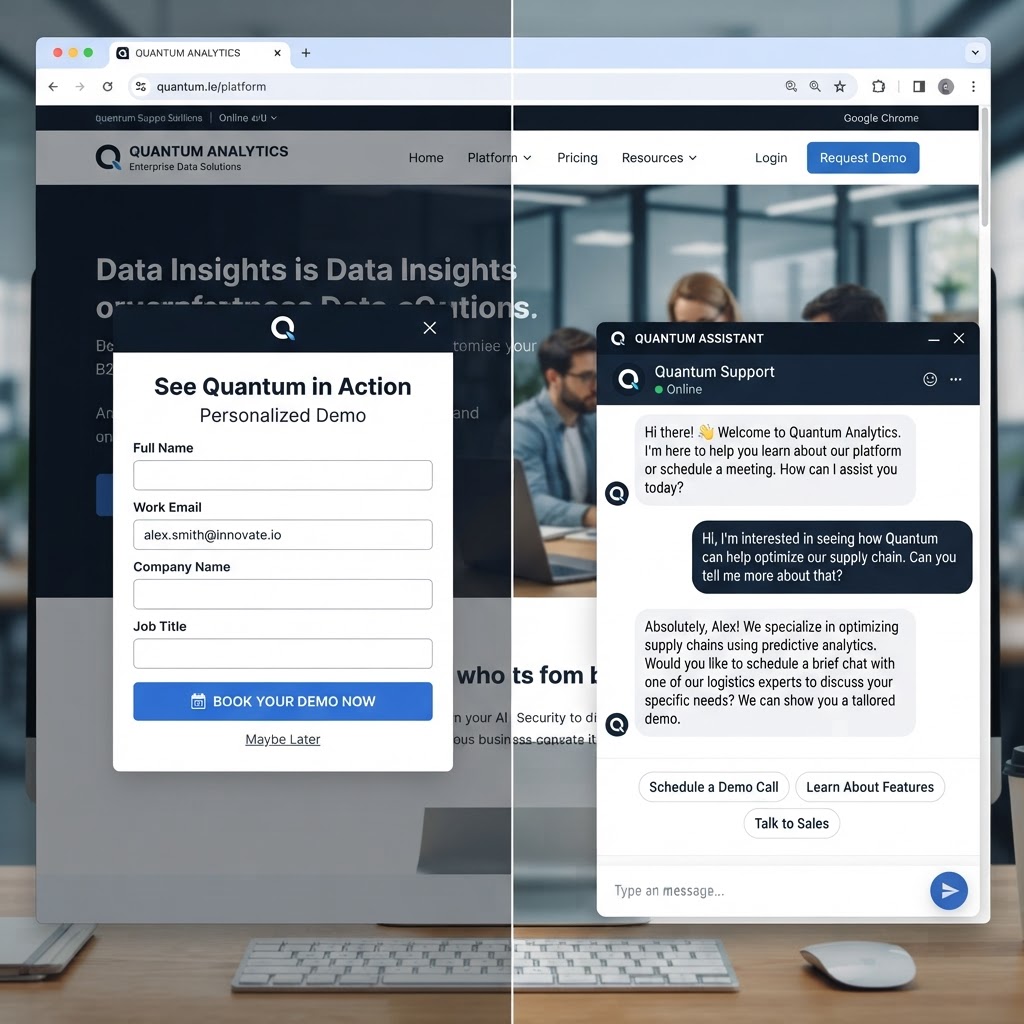
Popups vs. Chatbots for B2B Conversion: Which Actually Converts Better in 2026?
Popups and chatbots solve different parts of the conversion problem: popups are best for delivering a single, timely, high-intent offer to the right visitor at the right moment, while chatbots are best for answering specific questions and qualifying leads through conversation. For most B2B websites, the highest-converting setup isn't choosing one over the other — it's using intent-triggered popups to capture attention at key moments and a chatbot to handle follow-up conversation once someone engages.
How Each Tool Actually Performs
Popups: High Intent, Low Friction
Well-targeted B2B popups — triggered by exit intent, scroll depth, time on page, or account tier rather than shown to every visitor uniformly — convert at roughly 4–5%+, compared to the 1–2% average for generic, un-targeted popups. Their strength is speed: a visitor sees one clear offer and can act in a single click.
Chatbots: Better for Qualification, Slower for Conversion
Chatbots excel at answering pre-sales questions and qualifying leads through a guided conversation, valuable for complex products where visitors have genuine questions before converting. The tradeoff is friction: chatbots require typing or selecting through multiple steps, and engagement rates on proactive chat prompts are typically far lower than passive popup impressions, since many B2B visitors actively avoid open-ended chat windows.
Popups vs. Chatbots at a Glance
| Factor | Popups | Chatbots |
|---|---|---|
| Typical friction | Low — one click | Higher — multi-step conversation |
| Best for | Timed, high-intent offers | Answering specific questions |
| Conversion rate (targeted) | 4–5%+ | Varies, generally lower engagement |
| Setup effort | No-code, minutes | Requires conversation flow design |
| Works well with de-anonymization | Yes — account-tier targeting | Partially — routing only |
Why the "vs." Framing Misses the Point
A popup is a single, timed offer — book a demo, download a guide, view a comparison page — matched to a behavioral signal. A chatbot is a conversation designed to handle ambiguity a static offer can't. Treating them as competitors leads B2B teams to either over-invest in a chatbot most visitors ignore, or under-invest in the behavioral targeting that makes popups actually convert instead of annoying visitors.
How to Combine Them Effectively
Use De-Anonymization to Decide Who Sees What
Upvert's website de-anonymization identifies the company behind a visit in real time. A known target account might see a personalized popup inviting them to talk to their named AE, while an unidentified visitor gets a chatbot prompt to answer general questions first.
Trigger Popups on Real Signals, Not Timers
Intent-triggered popups that fire on exit intent, scroll depth, or repeat visits consistently outperform popups shown to everyone after a flat delay, because they match the offer to a moment of actual engagement.
Personalize the Destination, Not Just the Prompt
Popups that route to a generic contact form convert worse than ones that route to a personalized microsite relevant to the visitor's industry or account.
What the Data Suggests
Personalized landing experiences convert up to 80% higher than generic pages, and B2B teams that pair de-anonymization with targeted popups and personalized destinations report 15–22% increases in overall website conversion. Chatbots remain useful for qualification and support, but for the specific job of converting a high-intent visitor into a booked meeting or trial signup, well-targeted popups tend to outperform proactive chat prompts on raw conversion rate, largely due to lower friction and higher visibility.
Choosing the Right Approach for Your Site
If your biggest problem is visitors leaving without converting, start with intent-triggered popups tied to real behavioral signals and account identification. If your biggest problem is visitors having unanswered questions before they'll convert, a chatbot can help — but it works best as a complement to targeted popups, not a replacement for them.
Frequently Asked Questions
Well-targeted, intent-triggered popups typically convert at a higher rate (4–5%+) than proactive chatbot prompts, largely because they require less effort from the visitor and can be matched precisely to behavioral signals like exit intent or scroll depth.
Yes, in most cases. Popups work well for capturing high-intent moments with a single clear offer, while chatbots work well for answering specific pre-sales questions — they solve different parts of the conversion journey rather than competing directly.
An intent-triggered popup fires based on visitor behavior — such as exit intent, scroll depth, time on page, or account-tier identification — rather than appearing identically to every visitor after a fixed delay.
Yes. Identifying the company behind a visit lets you decide whether to show a personalized popup for known target accounts or a more general chatbot prompt for unidentified visitors, improving relevance for both.
Intent-triggered popups convert at roughly 4–5%+ versus a 1–2% industry average, and when paired with personalized landing pages, B2B teams report 15–22% increases in overall website conversion.
The winning B2B conversion stack isn't popups or chatbots — it's identity-driven popups doing the heavy lifting, with chat as a supporting layer.
Test intent-triggered popups against your own conversion funnel — book a demo or start a free trial of Upvert.