Upvert vs. Pendo: Which Platform Wins for In-App Popups and Website Personalization in 2026?
Pendo and Upvert both use popup-style messaging to influence B2B buyer behavior, which is why they're often mentioned in the same breath — but they operate at completely different stages of the funnel. Here's how they actually compare, and when it makes sense to use both.
The Short Answer
Pendo is built primarily for in-product analytics and in-app guides once a user is already logged into your product, while Upvert is built for the pre-signup B2B website — de-anonymizing anonymous visitors and triggering personalized popups and microsites before someone ever creates an account. Teams that need both product-led in-app guidance and top-of-funnel website personalization typically pair Pendo (or a lighter in-app tool) with Upvert rather than choosing one over the other. For B2B teams whose primary goal is converting website traffic, Upvert is the more purpose-built and lower-cost option; see the full Upvert vs. Pendo comparison.
Different Funnel Stage, Different Job
Pendo requires a user to be logged into your product before it can do anything — it instruments in-product events, powers in-app walkthroughs and guides, and surfaces NPS and feature-adoption analytics for existing users and trial signups. It has no visibility into the much larger pool of anonymous visitors who land on your marketing website and leave before ever creating an account.
Upvert is built for exactly that pre-signup gap. Website de-anonymization resolves anonymous visitors to companies, typically matching 30-50% of B2B traffic, and increasingly to named individuals. Once identified, visitors can be served intent-triggered popups based on page depth, time on page, scroll percentage, or account tier, or routed to a fully personalized microsite built for their segment or account — all before a form is ever filled out.
Implementation Effort
Pendo's depth comes with setup cost: instrumenting product events for accurate in-app targeting typically requires engineering time, and rolling out guides across a complex product can take weeks. Upvert's website-focused scope means implementation is no-code — install a single script tag, connect de-anonymization, and configure popup or microsite rules directly in the platform. Most teams are live within days.
Pricing
Upvert publishes tiered pricing: Starter at $250/month, Pro at $500/month, and custom Enterprise pricing for larger deployments. Pendo pricing is typically quote-based and scales with monthly active users and product complexity, which usually puts it at a meaningfully higher price point for mid-market teams, particularly once a company needs guides across multiple products or business units.
When to Use Each
Choose Pendo (or a similar in-app tool) if your primary need is understanding and guiding behavior inside a product that users are already logged into — onboarding flows, feature adoption campaigns, in-app NPS. Choose Upvert if your primary need is converting anonymous website traffic before signup — identifying which companies are on your site, personalizing what they see, and triggering the right popup or microsite at the right moment. Many B2B teams eventually run both: Upvert converts the anonymous visitor into a signup or trial, and an in-app tool takes over from there to drive activation.
Where the Two Overlap
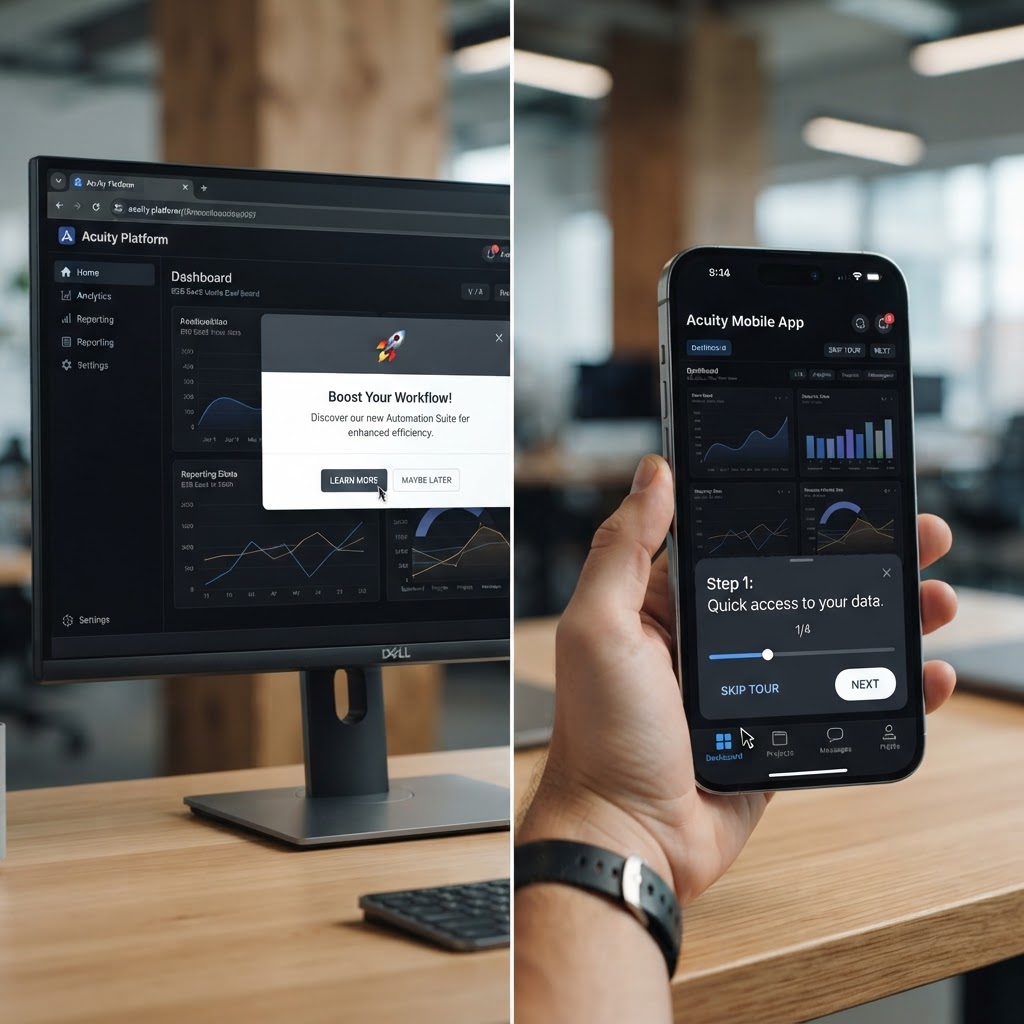
The overlap is narrower than it looks. Both tools can trigger targeted popups, but Pendo's popups fire based on in-product behavior (a feature used, a milestone hit) for known, logged-in users, while Upvert's popups fire based on website behavior and firmographic identity for anonymous visitors who haven't signed up yet. If your growth motion depends heavily on converting cold website traffic — through paid ads, ABM, or organic search — that's squarely Upvert's territory, not Pendo's.
Is Upvert a Pendo alternative?
Not exactly — Upvert and Pendo solve different problems. Upvert is a website de-anonymization and personalization platform for pre-signup traffic; Pendo is an in-product analytics and guide platform for logged-in users. Teams looking specifically for pre-signup website personalization use Upvert as the Pendo alternative for that use case.
Can I use Upvert and Pendo together?
Yes. It's common for B2B teams to use Upvert to convert anonymous website traffic into signups and trials, then use Pendo to guide and analyze behavior once those users are inside the product.
What does Upvert cost compared to Pendo?
Upvert's published pricing starts at $250/month for the Starter plan and $500/month for Pro, with custom Enterprise pricing. Pendo is typically quote-based and scales with monthly active users, generally landing at a higher price point for equivalent mid-market usage.
Does Pendo work on anonymous website traffic?
No. Pendo requires a user to be logged into an instrumented product to track behavior or trigger in-app guides. It does not de-anonymize or personalize experiences for visitors who haven't signed up.
How long does it take to implement each platform?
Upvert is no-code and typically live within days via a single script tag. Pendo implementation usually requires engineering time to instrument product events and can take longer depending on product complexity.
See the Difference on Your Own Traffic
If you're evaluating tools to convert more of your anonymous website traffic before signup, book a demo of Upvert, review the full Upvert vs. Pendo breakdown, or check pricing.