The 2026 B2B Buyer Experience Report, Decoded: 8 Numbers That Should Change How Your Website Converts
Short answer: 6sense's 2026 B2B Buyer Experience Report, based on 3,596 completed purchases and 1,011 stalled or abandoned evaluations, finds that buyers first talk to a seller about 59% of the way through a 10.3-month journey, and that only 35.2% used their own real contact details on a vendor form. Most of the decision is made before a lead exists, much of it on vendor websites. Teams that identify accounts during that anonymous stretch and serve them relevant content without a form get influence before the shortlist hardens.
6sense published the report in November 2026. Below are the eight findings most relevant to website, demand gen and RevOps teams, followed by what to do about them. All figures come from the 6sense 2026 B2B Buyer Experience Report; the interpretation is ours.
The 8 Numbers
1. First seller contact happens 59.2% of the way through the journey
The average cycle runs 10.3 months, so buyers typically engage a vendor live about six months in. Everything before that, which 6sense calls the Selection Phase, happens without sales in the room.
2. 91.4% have ranked their shortlist before first contact
By the time someone books a demo, the group usually has a favorite, and that pre-contact favorite wins roughly 82% of the time. The eventual winner was already on the Day 1 shortlist in about 92% of journeys.
3. 82% of first conversations are started by the buyer
Buyers decide when to become visible. Being present while they research matters more than how fast you respond once they raise a hand.
4. Only 35.2% used their real contact information on a form
About 31.6% had a teammate fill out the form instead, 19.3% used a personal or secondary email, 17.7% used AI tools to avoid the form, and 7.4% skipped gated content entirely. A form fill is a weak and often misleading proxy for who is evaluating you.
5. Vendor websites are the top channel between purchases
96% of buyers keep up with their category between evaluations. Vendor websites led the channel list at 35.9%, ahead of events, review sites and industry media. Large language models ranked last at 15%.
6. LLM use fell from 94% to 81%, and only 26% use LLMs to discover vendors
Buyers mostly use AI tools to summarize and validate what they already know. AI visibility is worth managing, but it has not replaced your website as a source of influence.
7. Buying groups average about 10 people, and 71% start with conflicting favorites
IT is involved in roughly seven in ten software purchases, and finance is the most common supporting function. Your site has to serve more than the champion.
8. 77.9% of stalled buyers expect to revisit within 12 months
Most no-decision outcomes are pauses. Only 4.3% firmly decided not to pursue the purchase.
What This Means for Your Website
Stop waiting for the form to tell you who is evaluating
If roughly two in three buyers hide or disguise their identity, your CRM is missing most active evaluations. Website de-anonymization closes part of that gap by matching visits to companies through IP-to-company data and reverse DNS, with person-level identification where available. It turns anonymous traffic into a list of accounts researching your pricing, integrations and security pages right now.
Win the Selection Phase, not just the demo
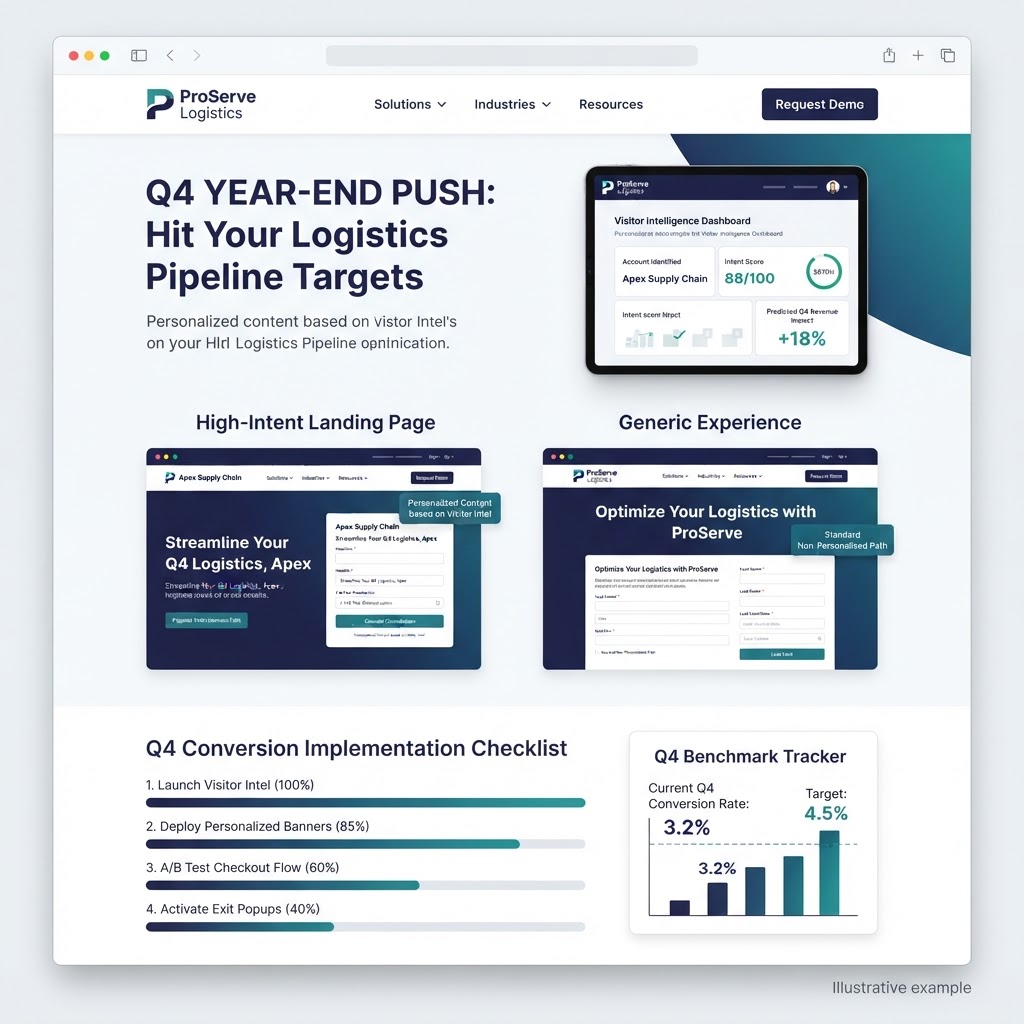
Because shortlists form before contact, the website's job during Selection is to help buyers build the case for you. Show an identified manufacturing account your manufacturing proof. Give a returning account a comparison page instead of the generic homepage. Intent-triggered popups and personalized microsites do this without asking for an email first.
Serve the supporting personas
A visitor on your security or SOC 2 page is often the IT reviewer, not the champion, so trigger a concise security overview there. A visitor lingering on pricing may be finance; offer an ROI one-pager. Persona-aware, ungated content helps a 10-person group reach consensus.
Treat returning accounts as restarted evaluations
When a paused account returns after months of silence, its budget, stakeholders or requirements have probably changed. Alert the owning rep and show the account what is new since its last visit.
A 30-Day Action Plan
- Week 1: Install visitor identification and measure what share of ICP accounts on your site never fill out a form.
- Week 2: Build two account-tier popups: one for pricing-page visitors from ICP companies and one for security or integration-page visitors.
- Week 3: Launch one personalized microsite per top segment with ungated, shareable proof the whole buying group can use.
- Week 4: Route returning-account alerts to reps in Slack or HubSpot and review which pages identified accounts visit before they convert.
Where Upvert Fits
Upvert combines Warmly-powered website de-anonymization, AI Smart Popups, AI custom landing pages and in-app guides in one script with native HubSpot sync. The Conversions Unlocked plan is $99/month with selectable de-anonymization credit tiers and a 14-day free trial. See pricing, or read The Dark Funnel Problem and Website De-Anonymization for ABM.
Frequently Asked Questions
When do B2B buyers first contact a vendor?
According to 6sense's 2026 report, about 59% of the way through an average 10.3-month buying cycle, after most have already ranked their shortlist.
How many B2B buyers give real contact details on forms?
Only 35.2% of buyers in the 2026 study used their own real contact information. Others had a teammate fill the form, used a personal email, used AI tools to avoid it or skipped gated content.
Are LLMs replacing vendor websites in B2B research?
Not according to this data. 81% of buyers used LLMs, but only 26% used them to find new vendors, and vendor websites were the most-used channel for staying current between purchases.
How can a website influence buyers before they talk to sales?
Identify the visiting account, serve relevant ungated content for its industry and persona through intent-triggered popups and personalized pages, and alert the owning rep when ICP accounts return.
Want to see which accounts are evaluating you right now? Start your 14-day free trial of Upvert.