The Dark Funnel Problem: How B2B Teams Use First-Party Intent to See Buyers Before They Raise Their Hand
Short answer: The dark funnel is the portion of B2B research that standard attribution cannot track: conversations in peer communities, questions to AI assistants, review-site reading, and anonymous visits to your own website. You cannot see most of it, but first-party website intent is the exception. By identifying which accounts visit your site and what they read, demand gen teams can respond while the buyer is still researching instead of waiting for a form fill.
What Is the Dark Funnel?
The dark funnel describes buyer activity that happens outside the channels your marketing automation measures. A buyer reads a comparison article, asks a colleague in a Slack community, checks a review site, and queries an AI assistant. None of that appears in your CRM. Research from Gartner has long reported that B2B buyers spend only a small share of their buying journey meeting directly with suppliers, with much of the rest spent researching independently. The implication is simple: by the time someone submits a form, a lot has already been decided.
Why Attribution Misses It
Last-touch and multi-touch models can only credit what they observe. Forms, ad clicks, and email opens leave trails. Reading three pages and leaving does not. This creates a predictable distortion: channels that capture late-stage demand look efficient, while channels that create demand look wasteful. Teams then cut the very programs that fill the pipeline.
The One Signal You Own: First-Party Intent
First-party intent data is behavioral data collected on your own properties: pages viewed, time spent, return visits, and in-product actions. Unlike third-party intent feeds, which infer interest from activity across other publishers, first-party intent is direct evidence that a specific account looked at your pricing page. For a deeper comparison, see first-party vs. third-party intent data.
How to Light Up the Dark Funnel on Your Own Site
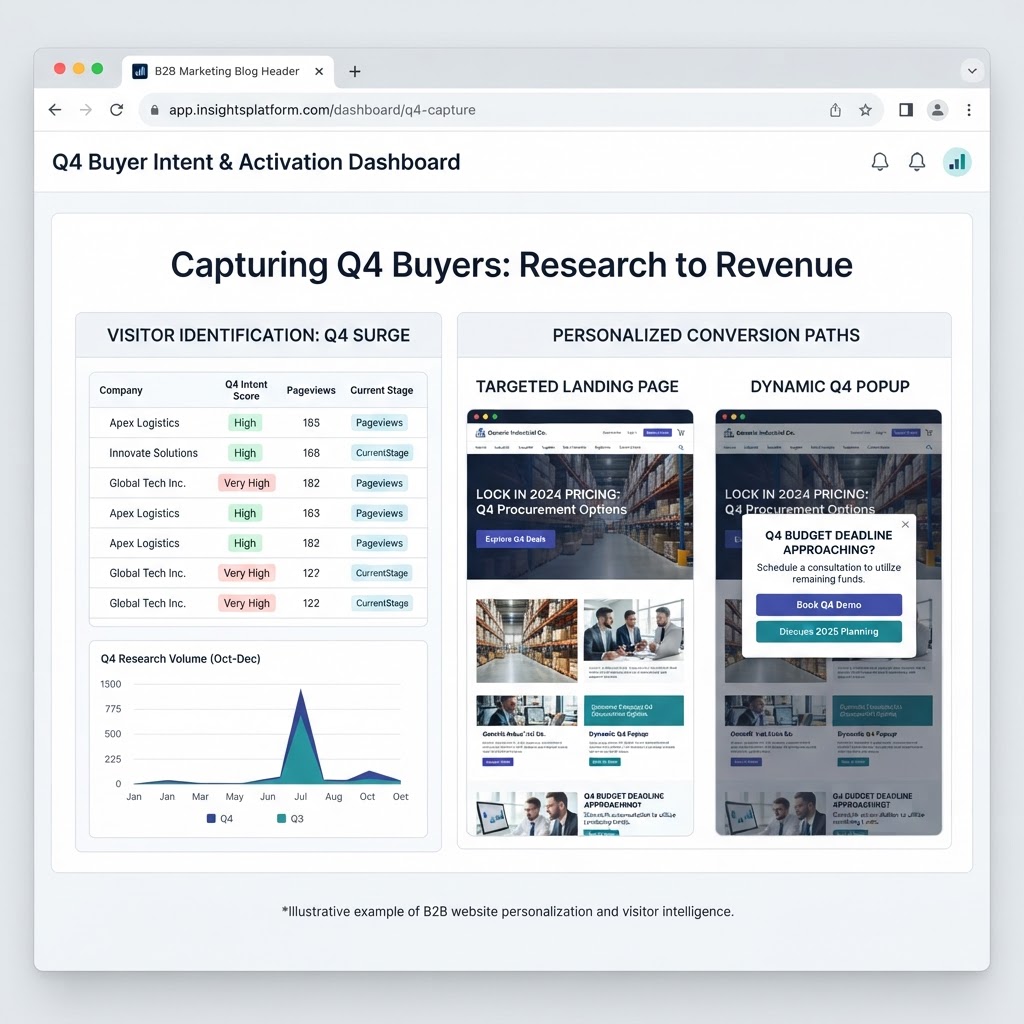
1. Identify visiting accounts
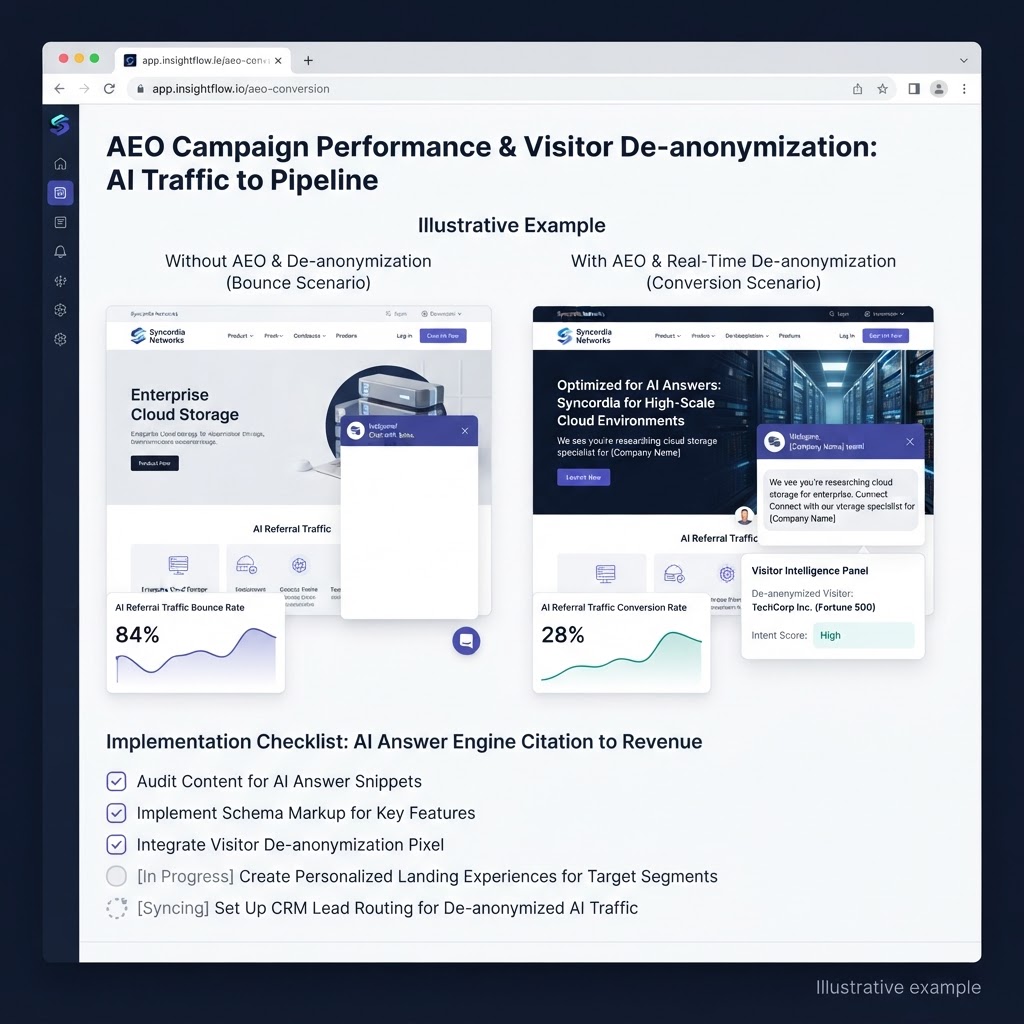
Website de-anonymization matches anonymous visits to companies using IP-to-company matching and reverse DNS, and can add person-level identification through partners like Warmly. Expect partial coverage: remote work, VPNs, and mobile traffic lower match rates, so measure your own rate rather than trusting averages.
2. Score by page, not just visit
A visit to your blog is a weak signal. A visit to pricing, integrations, security, or a comparison page is a strong one. Build a simple points model: weight high-intent pages, repeat visits within seven days, and multiple visitors from one account.
3. Respond on the page, not only in the inbox
Most teams stop at a sales alert. But the visitor is on your site right now. Intent-triggered popups can fire on scroll depth, time-on-page, exit intent, or account tier to offer the right next step, such as a short demo, a relevant case study, or a comparison guide. Target accounts can be routed to a personalized microsite that speaks to their industry.
4. Route to the right person fast
Send high-score accounts to Slack and sync them to HubSpot or Salesforce. Define a service-level agreement, for example outreach within four business hours for tier-one accounts. Our guide on marketing-to-sales handoff shows how.
Reporting Without Perfect Attribution
Accept that attribution will stay imperfect and add complementary measures: self-reported attribution on forms ("How did you hear about us?"), account-level engagement trends, branded search volume, and the number of target accounts showing repeat visits. Together they give a more honest picture than any single model.
A Simple 30-Day Plan
- Week 1: install identification and define your top 100 target accounts.
- Week 2: build the page-scoring model and a Slack alert for tier-one accounts.
- Week 3: launch two triggered popups on high-intent pages.
- Week 4: review match rate, response time, and meetings created, then adjust.
Frequently Asked Questions
What is the dark funnel in B2B marketing?
It is the buyer research that happens outside trackable channels, such as peer recommendations, AI assistants, and anonymous site visits.
Can you track the dark funnel?
Not fully. But first-party signals on your own website, such as identified account visits and page behavior, let you see a meaningful part of it.
What is first-party intent data?
It is behavioral data you collect directly on your own properties, such as pages viewed, time on page, and return visits.
Is website de-anonymization accurate?
It identifies a portion of traffic, not all of it. Accuracy and match rates depend on your audience and method, so test on your own traffic.
How much does Upvert cost?
Plans start at $99/month. See the pricing page.
See which accounts are already on your site: book a demo or start for free.