AEO for B2B Marketers: How to Optimize Your Website So AI Answer Engines — and Real Buyers — Actually Convert
Short answer: Answer Engine Optimization (AEO) means writing and structuring content — clear direct-answer paragraphs, defined terms, FAQ sections, and structured data — so AI assistants like ChatGPT, Gemini, and Perplexity can cite it accurately. For B2B marketers, AEO gets you cited, but it doesn't automatically get you a lead: traffic that arrives from an AI answer or an AI browsing agent is still anonymous until you identify it. Pairing AEO content with website de-anonymization and intent-triggered popups turns an AI citation into a conversation with a real account, not just an impression.
What AEO Is (and Why B2B Marketers Can't Ignore It)
Traditional SEO optimizes for a ranked list of blue links; AEO optimizes for being the source an AI assistant quotes or paraphrases in a direct answer. As more B2B research happens through conversational AI tools before a buyer ever lands on a vendor's website, showing up accurately in those answers has become a real, if still-emerging, channel — one that behaves differently from classic organic search.
Structuring Content for AI Answer Engines
The mechanics of AEO are concrete and testable:
- A direct-answer paragraph near the top that answers the page's core question in two to three sentences, before any narrative buildup.
- Question-style H3 subheadings in a dedicated FAQ section, matching how people actually phrase questions to an AI assistant.
- Defined terms and specific numbers — match rates, implementation times, pricing tiers — rather than vague claims, since AI assistants favor citable, verifiable specifics.
- Structured data (JSON-LD), particularly FAQPage and Organization schema, which gives answer engines a machine-readable version of the same content.
The Conversion Gap: AI Traffic Is Still Anonymous Traffic
Here's the part AEO guides usually skip: getting cited by an AI assistant, or getting visited by an AI browsing agent researching on a buyer's behalf, doesn't tell you who's actually interested. That traffic lands on your site the same way any other anonymous visit does — no form fill, no attribution, just a session that either converts or disappears. Treating AEO purely as a content exercise leaves the hardest part of the funnel — figuring out who showed up — unsolved.
Closing the Gap with De-Anonymization and Personalization
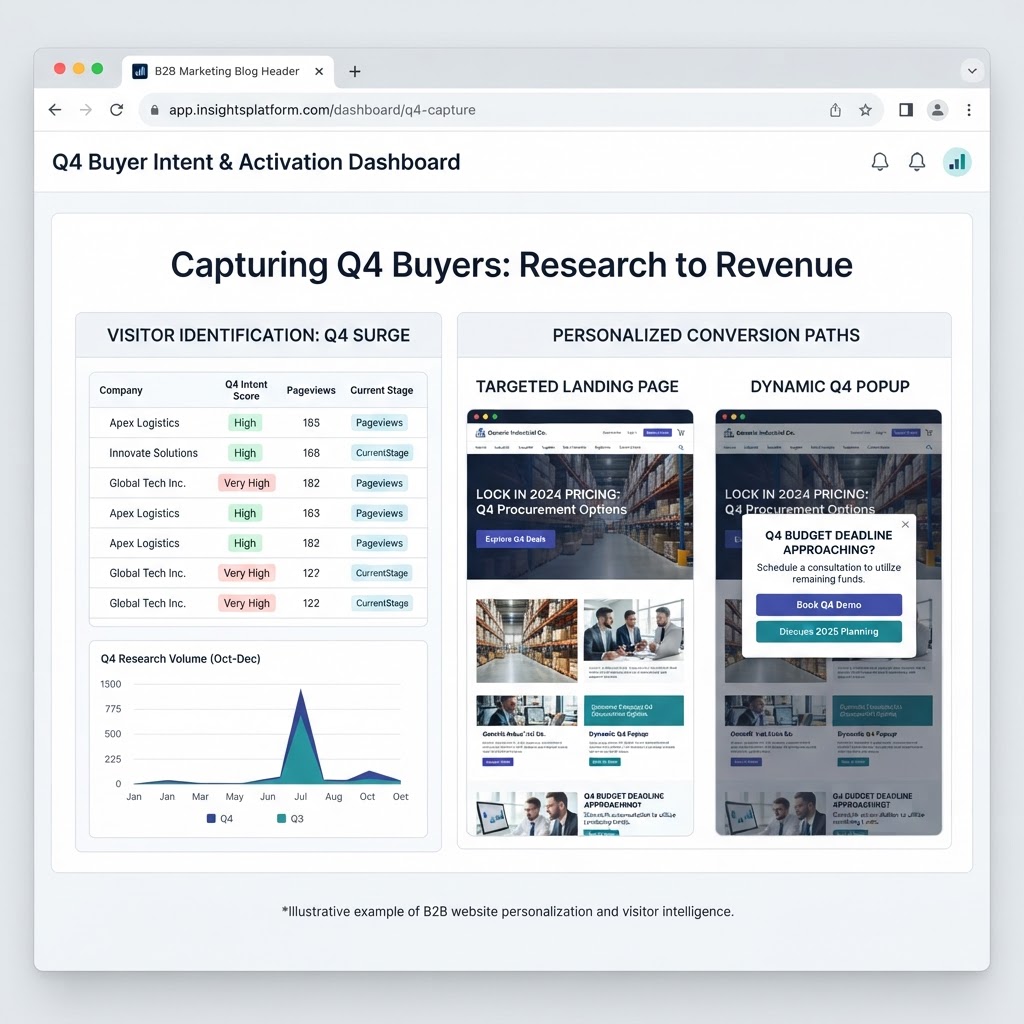
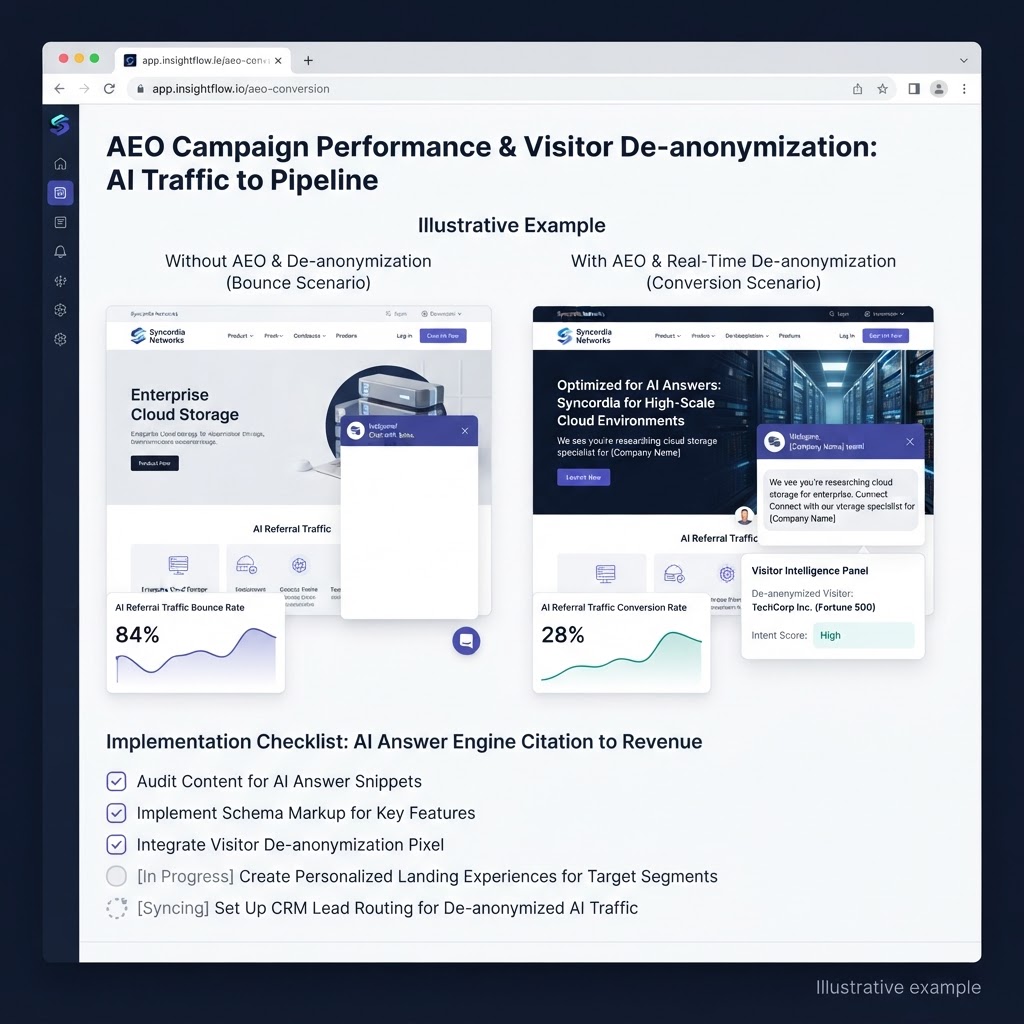
Website de-anonymization identifies the company (and where possible the individual) behind that traffic using IP-to-company matching, reverse DNS, and Upvert's identity-resolution partnership with Warmly — regardless of whether the visit came from organic search, a paid ad, or an AI answer engine. Once identified, that visit can trigger a personalized microsite tailored to the account, or an intent-triggered popup based on how deep they read and how the visit compares to their account tier — closing the loop from 'cited by an AI' to 'talking to sales.'
An AEO + Conversion Checklist
- Add a 2–3 sentence direct-answer paragraph to every high-value page.
- Build a 3–5 question FAQ section using real buyer phrasing.
- Publish FAQPage and Organization JSON-LD on key pages.
- Turn on website de-anonymization so anonymous AI-referred and organic traffic gets identified in real time.
- Set an intent-triggered popup or personalized microsite for your highest-value pages so identified visitors get a next step, not a dead end.
Frequently Asked Questions
What is AEO (Answer Engine Optimization)?
AEO is the practice of structuring content — direct-answer paragraphs, FAQ sections, defined terms, and structured data — so AI assistants and answer engines like ChatGPT, Gemini, and Perplexity can accurately surface and cite it in their responses.
How is AEO different from traditional SEO?
Traditional SEO optimizes for ranking in a list of search results; AEO optimizes for being the specific source an AI assistant paraphrases or cites in a direct, conversational answer, which rewards clarity, specificity, and structured data over keyword density.
Does AEO actually drive B2B pipeline?
AEO can drive qualified traffic and brand visibility, but by itself it doesn't identify who that traffic is. Pairing AEO content with website de-anonymization is what turns an AI-referred visit into an identified account that marketing and sales can actually follow up with.
What is agentic traffic and why does it matter for AEO?
Agentic traffic refers to visits from AI browsing agents researching on a buyer's behalf rather than a human directly browsing. Well-structured, citable content is more likely to be surfaced by these agents — but like any anonymous visit, it still needs de-anonymization to become an identifiable lead.
Want your AEO traffic to convert instead of bounce? Book a demo or start for free.