Q4 Budget Season: How to Capture B2B Buyers Researching Before Year-End
Short answer: Q4 brings two kinds of buyers: teams trying to spend remaining budget before it expires and teams scoping next year's plan. Both leave first-party intent signals on your website. To capture them, identify which accounts are visiting, prioritize the ones showing high-intent behavior, and respond immediately with popups and microsites built around year-end timing.
What Changes in Q4
Budget calendars create urgency that does not exist in other quarters. Some buyers have approved spend that disappears on December 31. Others are drafting next year's tooling plan and building shortlists. Procurement timelines are also tighter around holidays, so a vendor that responds slowly can lose a deal simply by missing the window.
First-Party Intent Signals to Watch
Your own website is the most reliable source of intent because the visitor chose to research you. Prioritize these signals:
- Pricing page visits, especially repeated ones.
- Comparison and alternatives pages, which suggest an active shortlist.
- Integration and security pages, which typically appear late in evaluation.
- Multiple visitors from the same company, a sign a buying group is forming.
- Return visits within a short window, showing momentum.
Turning Signals Into Identified Accounts
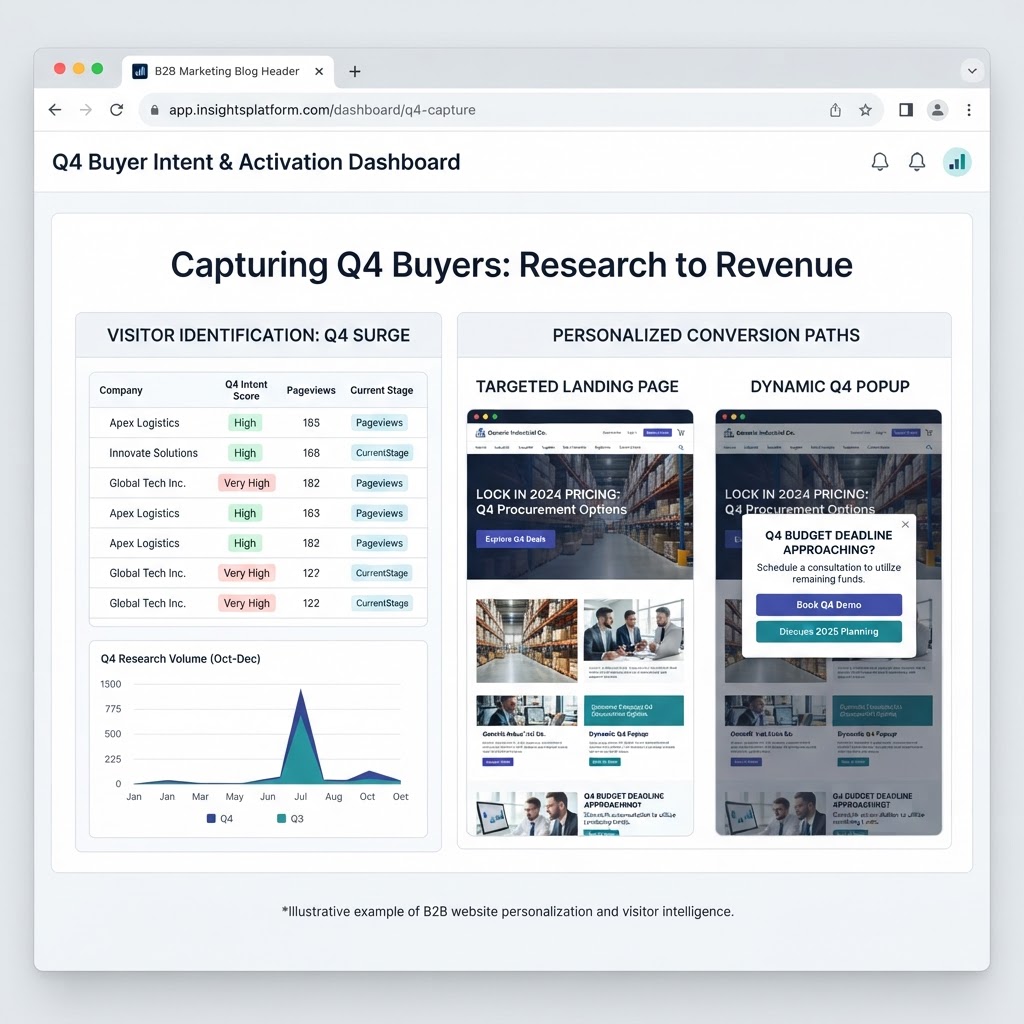
Signals are only actionable if you know who is behind them. Upvert's de-anonymization matches visits to companies using IP-to-company matching and reverse DNS, with person-level identification through its Warmly partnership. Each match comes with a confidence score so sales can focus on the most reliable identifications first.
Year-End Plays That Work
Play 1: Pricing-page popup with a Q4 offer
Trigger a Smart Popup after meaningful time-on-page for identified target accounts, offering a fast-start package, a planning call, or a scoped pilot that can close before year-end. Make the deadline real; invented urgency erodes trust.
Play 2: Next-year planning microsite
For accounts in planning mode, send a personalized microsite that frames your product against their 2027 priorities, with relevant proof points and a clear next step.
Play 3: Real-time sales alerts
When a target account hits pricing and integrations pages in the same session, alert the owner in Slack or your CRM so outreach lands within minutes instead of days.
Play 4: Exit-intent recovery
Offer a short planning checklist or calendar link to high-intent visitors who are about to leave without converting.
Align Marketing and Sales on Handoff
Agree on what counts as a hot account: for example, a target account with a pricing visit and a second session within seven days. Define who responds and by when. Speed matters most in the final weeks of the year.
How to Measure It
Track identified-account visits, popup conversion rate by trigger, meetings created from alerts, and pipeline influenced from Q4 sessions. Review weekly rather than monthly so you can adjust offers before the quarter closes. Plans begin at $99/month, and setup takes about five minutes.
Frequently Asked Questions
What is first-party intent data?
First-party intent data is behavior collected on your own properties, such as pages viewed, time spent, and return visits, that indicates a visitor's buying interest.
Why does Q4 matter for B2B demand generation?
Budget expiry and annual planning create urgency, so buyers move faster and shortlists form earlier than in other quarters.
How do I find which companies are on my site?
Use website de-anonymization, which matches IP addresses and other signals to companies and enriches the match with firmographic data.
Which signals show a buyer is close to purchase?
Repeated pricing visits, comparison and integration page views, and multiple visitors from one account are strong late-stage signals.
How quickly should sales follow up?
As fast as possible. Real-time alerts to Slack or your CRM allow outreach within minutes of a high-intent visit.
Make Q4 your strongest quarter: book a demo or start for free.