ChatGPT Referrals to B2B Sites Rose 303%: Why AI-Influenced Buyers Still Look Anonymous and How to Capture Them
Short answer: Demandbase Labs reported that monthly ChatGPT referral visits to B2B websites grew roughly 303% in a year, to about 2.6 million, yet that is still only around 0.33% of measured traffic. The bigger story is attribution: most AI-influenced visits arrive through branded search or direct traffic, so they look like ordinary visitors. Teams that identify visitors and convert them on-site can capture this demand even when analytics cannot label it.
What the Data Says
The analysis, reported in August 2026, covers 1,584 platform instances and more than 11 billion website visits from 1 June 2025 to 31 July 2026. Key findings as reported:
- Monthly ChatGPT referral visits rose from about 645,000 in June 2025 to 2.6 million in June 2026.
- That equals about 0.33% of measured traffic, and roughly 190 times less than Google sends in the same dataset.
- Referral volume more than doubled in May 2026, though no explanation was published.
- Perplexity referrals reportedly declined, while Gemini and Claude stayed flat.
Treat the figures with care: the dataset is proprietary and unaudited, and no industry breakdown or distribution data was published.
Why Referral Counts Understate AI Influence
Citing Similarweb, the same coverage notes that only about 8.8% of AI-influenced visits arrive as direct referrals, while roughly 56% arrive via branded search, where they appear as organic search. A buyer asks an assistant for vendor suggestions, then Googles your brand name. Your analytics credit organic search, and the AI touchpoint disappears. That means the 0.33% figure is likely a floor, not a ceiling.
Is AI Traffic Higher Quality?
Evidence conflicts. Invoca reported ChatGPT calls converting at 49%, Ahrefs reported AI visitors converting at 23 times conventional organic traffic, and Microsoft Clarity reported 3x. An ecommerce study found ChatGPT underperforming traditional channels. The disagreement appears to be largely methodological. The practical takeaway: measure your own AI-influenced visitors rather than assuming.
What Demand Gen Teams Should Do
1. Stop relying on referrer data alone
Add a self-reported attribution field ("How did you hear about us?") with an "AI assistant" option, and review it alongside analytics.
2. Identify the account, not just the channel
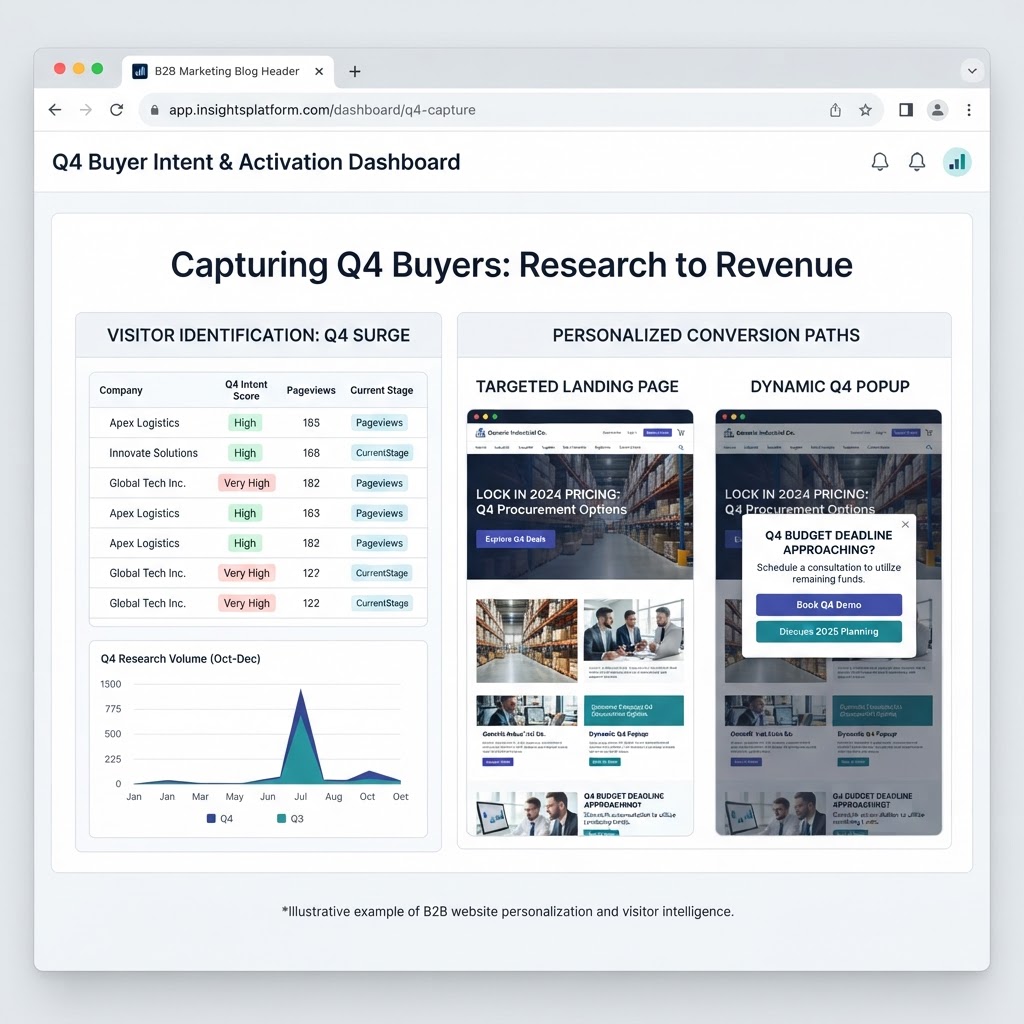
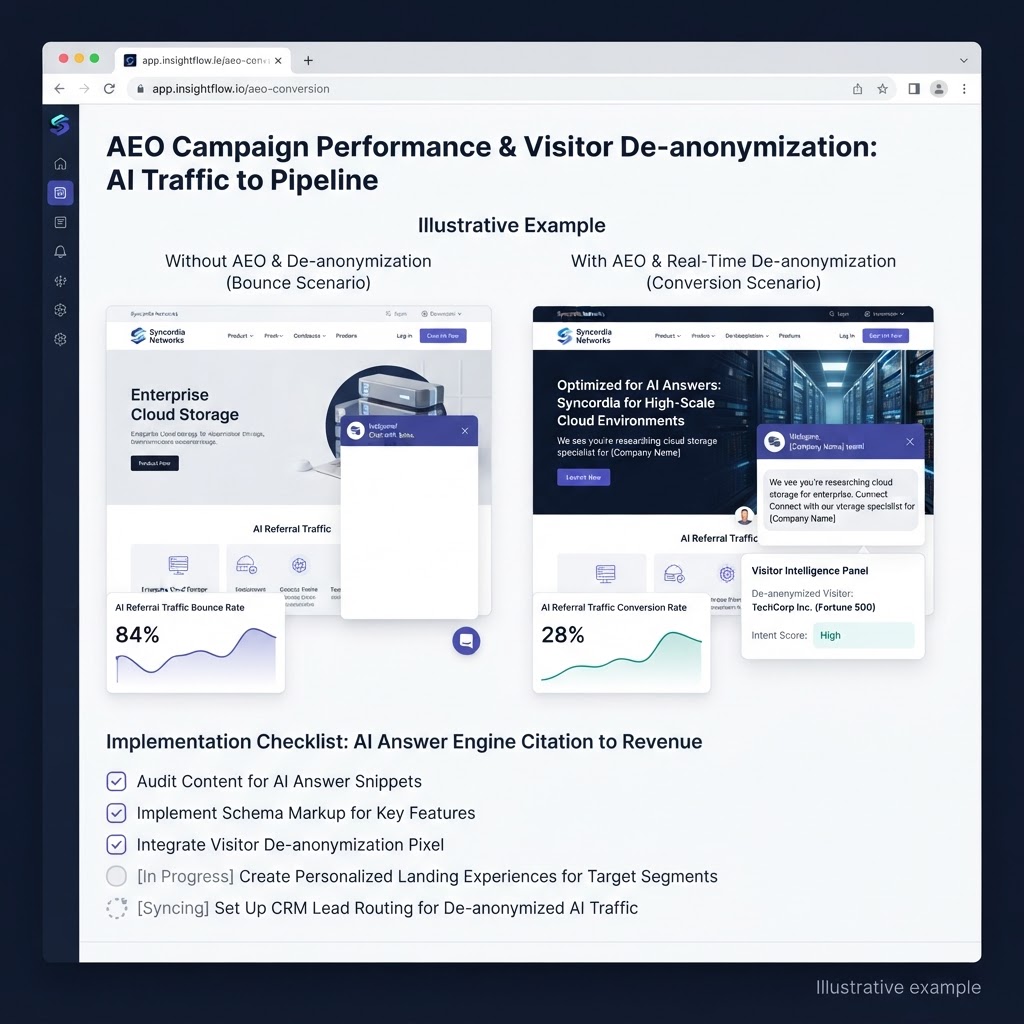
When attribution is fuzzy, identity is still useful. Website de-anonymization matches visiting companies through IP-to-company matching and reverse DNS, and Upvert adds person-level identification via Warmly. You may not know which prompt brought them, but you will know which target account is on your pricing page. See the agentic web and AI browsers for related caveats.
3. Make the landing experience answer-shaped
AI-influenced visitors often arrive with a specific question and a short list of vendors. Use intent-triggered popups on pricing and comparison pages to route them to the next useful step, whether that is a comparison, a demo, or a trial. Our guide on how intent-triggered popups fire covers page depth, time-on-page, scroll percentage, exit intent, and account-tier triggers.
4. Keep your own content citable
Clear definitions, specific facts, and structured FAQ sections make it easier for assistants to cite you. That applies to your product pages, comparison pages, and blog, and it is the same discipline behind our AEO guide for B2B marketers.
Where Upvert Fits
Upvert combines visitor identification, Smart Popups, and personalized microsites, installs in about five minutes, and starts at $99/month. It cannot tell you which AI prompt sent a visitor, but it helps you recognize and convert the right accounts once they arrive.
Frequently Asked Questions
How much traffic does ChatGPT send to B2B websites?
Demandbase Labs reported about 2.6 million monthly referral visits in June 2026, roughly 0.33% of measured traffic, up about 303% from a year earlier.
Why does AI traffic show up as organic or direct?
Many buyers use an assistant to shortlist vendors, then search the brand name or type the URL, so analytics credit search or direct instead of the assistant.
Does AI-referred traffic convert better?
Studies disagree. Some report much higher conversion and one ecommerce study reported lower, so measure your own visitors.
Can I identify which accounts are AI-influenced?
Not directly, but visitor identification shows which companies are on your site, and self-reported attribution adds context about how they found you.
What should I do first?
Add an AI option to your attribution form and set up identification and a popup on your pricing page to capture high-intent accounts.
See who is really on your site: book a demo or start for free.