How B2B Website De-Anonymization Actually Identifies a Company
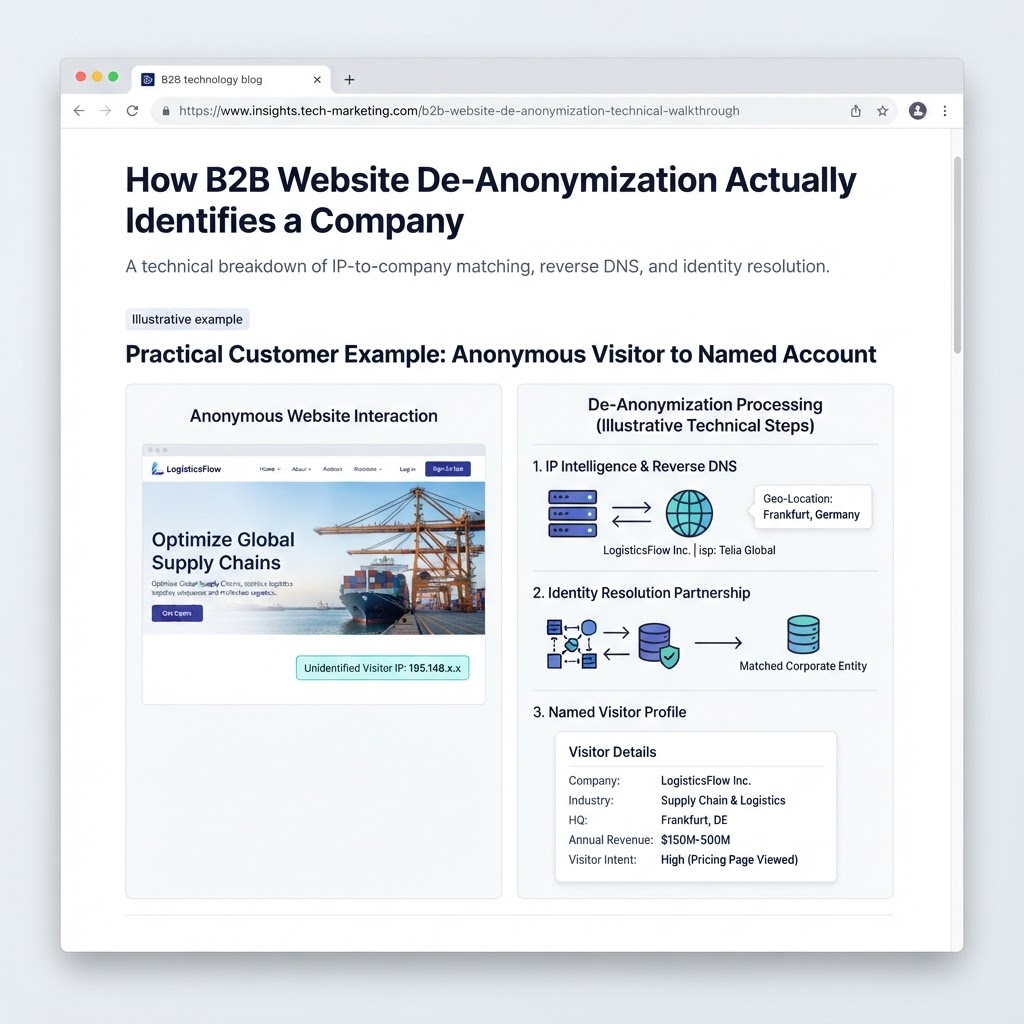
Website de-anonymization identifies anonymous visitors by matching their IP address to a company using IP-to-firmographic databases, reverse DNS lookups, and identity-resolution partnerships, then enriching that match with firmographic and, in some cases, person-level data. Realistic company-level match rates land between 30% and 70% of B2B traffic in 2026, depending on traffic quality and how many data sources a vendor combines. Here's what's actually happening under the hood.
The Three Core Methods Behind De-Anonymization
1. IP-to-Company Matching
Every visitor to your site sends an IP address. De-anonymization tools maintain (or license) a database that maps IP ranges to the businesses that own them — corporate offices, VPNs, and static ISP blocks assigned to a company. When a visitor's IP falls inside a known range, the platform resolves it to a company record with firmographic data: name, industry, employee count, revenue band, and technographics.
2. Reverse DNS and Network-Level Signals
Reverse DNS lookups check what hostname is registered against an IP address, which can confirm or sharpen a company match, particularly for larger organizations running their own network infrastructure. This is combined with WHOIS data and ASN (Autonomous System Number) lookups to filter out residential ISPs, mobile carriers, and known VPN/proxy ranges that would otherwise produce false matches.
3. Identity Resolution Partnerships
The highest-accuracy platforms don't rely on a single database. They combine first-party signals (form fills, CRM records, logged-in sessions) with third-party identity graphs from partners that specialize in resolving IP and cookie data to real companies and, where consent and data allow, real people. Upvert's de-anonymization is powered by Warmly.ai, layering multiple identity-resolution sources under one roof rather than depending on a single feed.
What Realistic Match Rates Look Like in 2026
Vendor claims of 90%+ identification rarely hold up under independent testing. Based on 2026 industry benchmarking, realistic company-level match rates run 30-70% of B2B website traffic, with the top end (60-70%) reserved for tools that combine IP matching, first-party cookies, and third-party enrichment simultaneously. Person-level match rates — an actual name, title, and email — are meaningfully lower: roughly 10-20% for US traffic, and under 5% for EU traffic because of GDPR restrictions on processing personal data without consent. Any vendor promising person-level identification on the majority of your anonymous traffic is a claim worth pressure-testing with a segmented pilot.
Company-Level vs. Person-Level Identification
These are two different products wearing the same name. Company-level identification tells you which accounts are on your site — useful for account-based marketing, sales prioritization, and ad retargeting. Person-level identification tells you which individual is browsing — useful for personalized outreach, but harder to obtain accurately and compliantly, especially in the EU. Most mature go-to-market teams treat company-level identification as the reliable baseline and layer person-level data on top only where it's available and consented.
How Upvert Combines These Methods
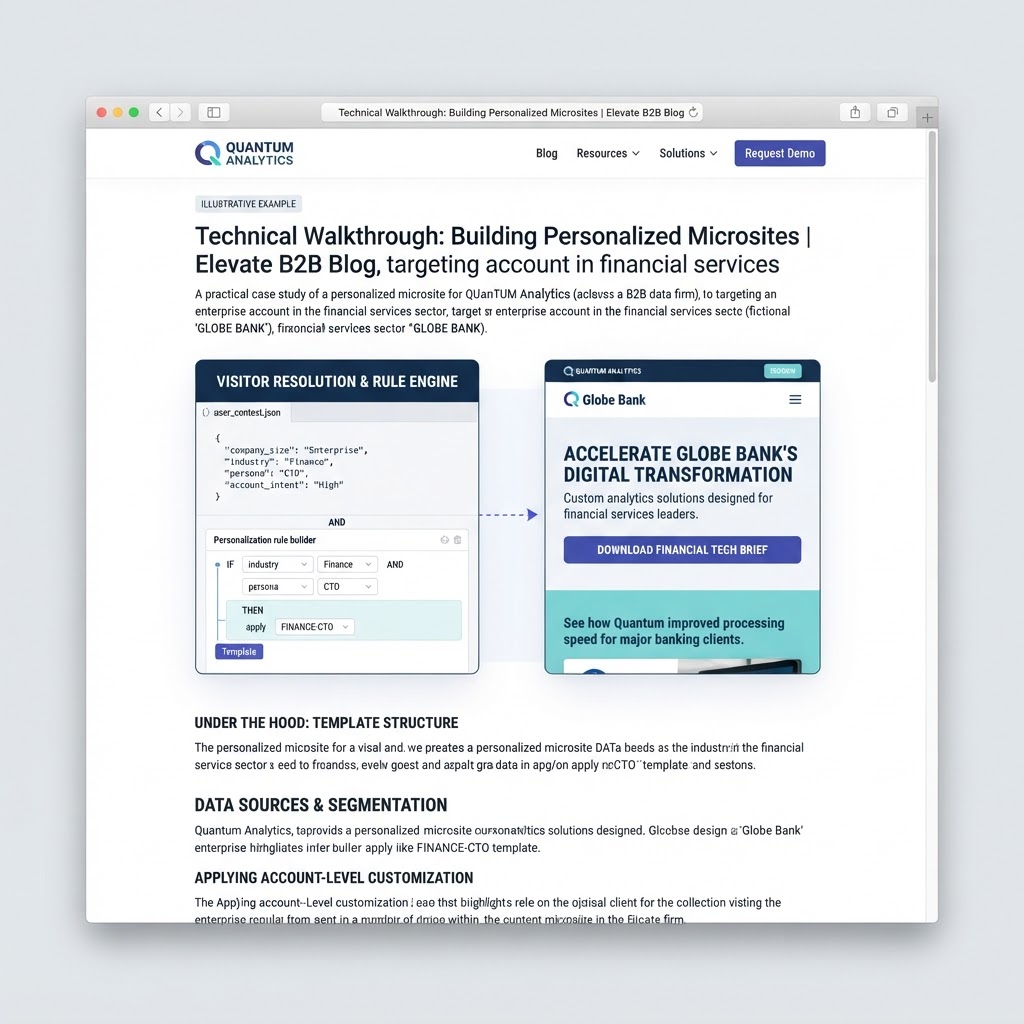
Upvert pairs Warmly-powered identity resolution with real-time behavioral data — page depth, time on page, referral source, and returning-account status — so an identified company isn't just a name in a table. It's a trigger. A de-anonymized visitor from a target account can automatically surface a personalized microsite or fire an intent-triggered Smart Popup tailored to their industry and stage, turning identification into an in-session conversion opportunity rather than a static report.
What Happens After a Visitor Is Identified
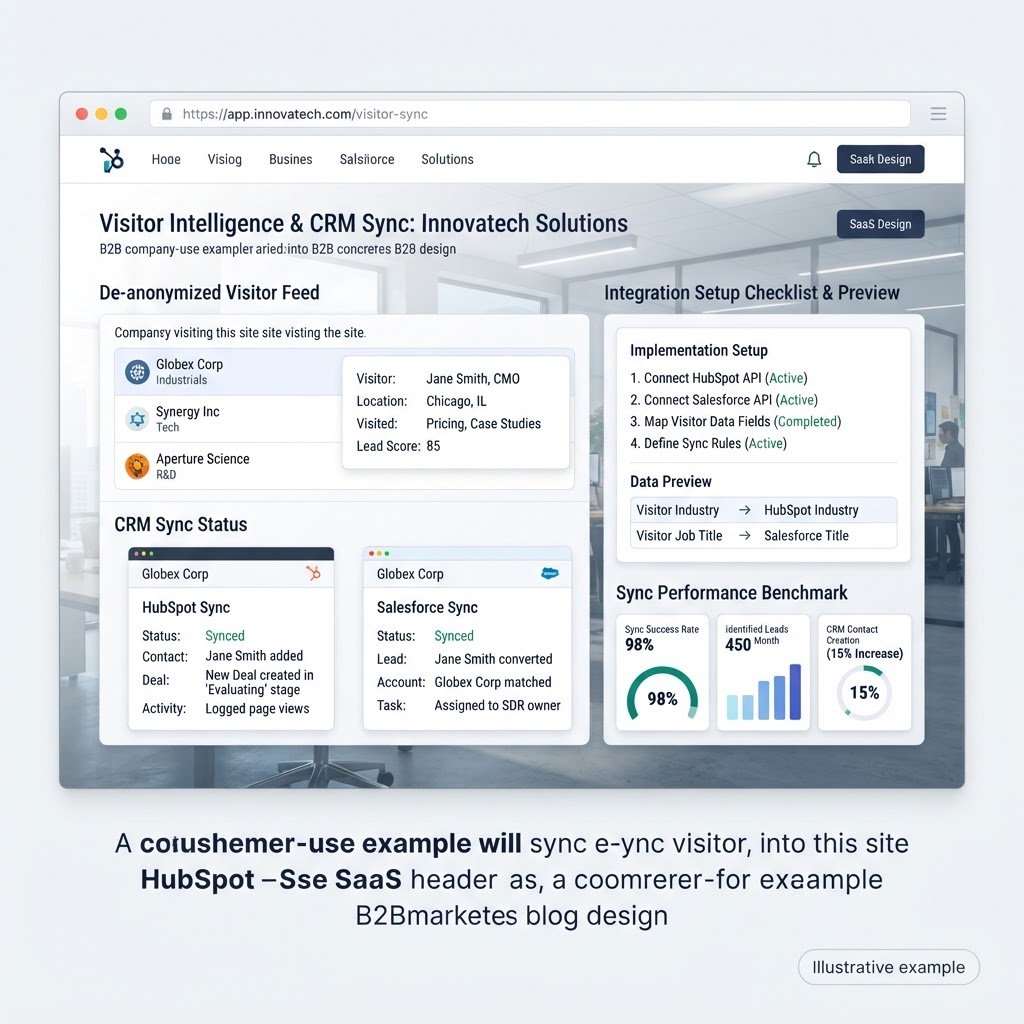
Identification is only valuable if it routes somewhere. Teams typically feed de-anonymized company data into three places: the CRM (for sales prioritization and account scoring), ad platforms (for retargeting known accounts instead of anonymous cookies), and on-site personalization (microsites and popups tailored to the identified account's industry or ICP tier). Upvert connects to Salesforce, HubSpot, Outreach, Apollo, and Slack out of the box, so an identified visitor can trigger a notification, update a CRM field, and change what that visitor sees on your site — all without engineering work.
Frequently Asked Questions
What is website de-anonymization?
Website de-anonymization is the process of identifying the company (and sometimes the individual) behind an otherwise anonymous website visit, using IP matching, network-level signals, and identity-resolution data partnerships.
How accurate is website de-anonymization?
Realistic company-level match rates run 30-70% of B2B traffic in 2026, with the higher end requiring multiple combined data sources. Person-level match rates are lower — roughly 10-20% for US traffic and under 5% for EU traffic.
Does de-anonymization work for EU or GDPR-covered traffic?
Company-level identification generally works across regions since it relies on business network data rather than personal data. Person-level identification is significantly more limited in the EU due to GDPR consent requirements.
What's the difference between company-level and person-level identification?
Company-level identification tells you which business is visiting your site; person-level identification attempts to name the specific individual. Company-level data is more reliable and more widely available.
How long does it take to set up de-anonymization on a website?
Upvert installs with a single script tag and no engineering resources — most teams are identifying visitors within 5 minutes of setup.
Want to see which companies are already on your site? Start a free trial or book a demo to see Upvert's de-anonymization in action.