How Intent-Triggered Popups Actually Fire: A Technical Guide to Timing, Triggers, and Targeting
Quick answer: Intent-triggered popups fire based on a combination of behavioral signals — scroll depth, time-on-page, page-depth in a session, exit-intent mouse movement — and, on the most advanced platforms, real-time visitor identification, so the same page can show different popups to an anonymous first-time visitor versus a returning, identified target account. Getting the timing and targeting logic right is what separates popups that convert at 15–22% from ones that just annoy visitors and get closed.
Most teams treat popups as a single blunt tool: show it after 10 seconds, to everyone, on every page. That approach is largely why popups got a bad reputation. Modern intent-triggered popups instead combine several signal types to decide not just when to show something, but whether to show it at all.
The Core Trigger Types
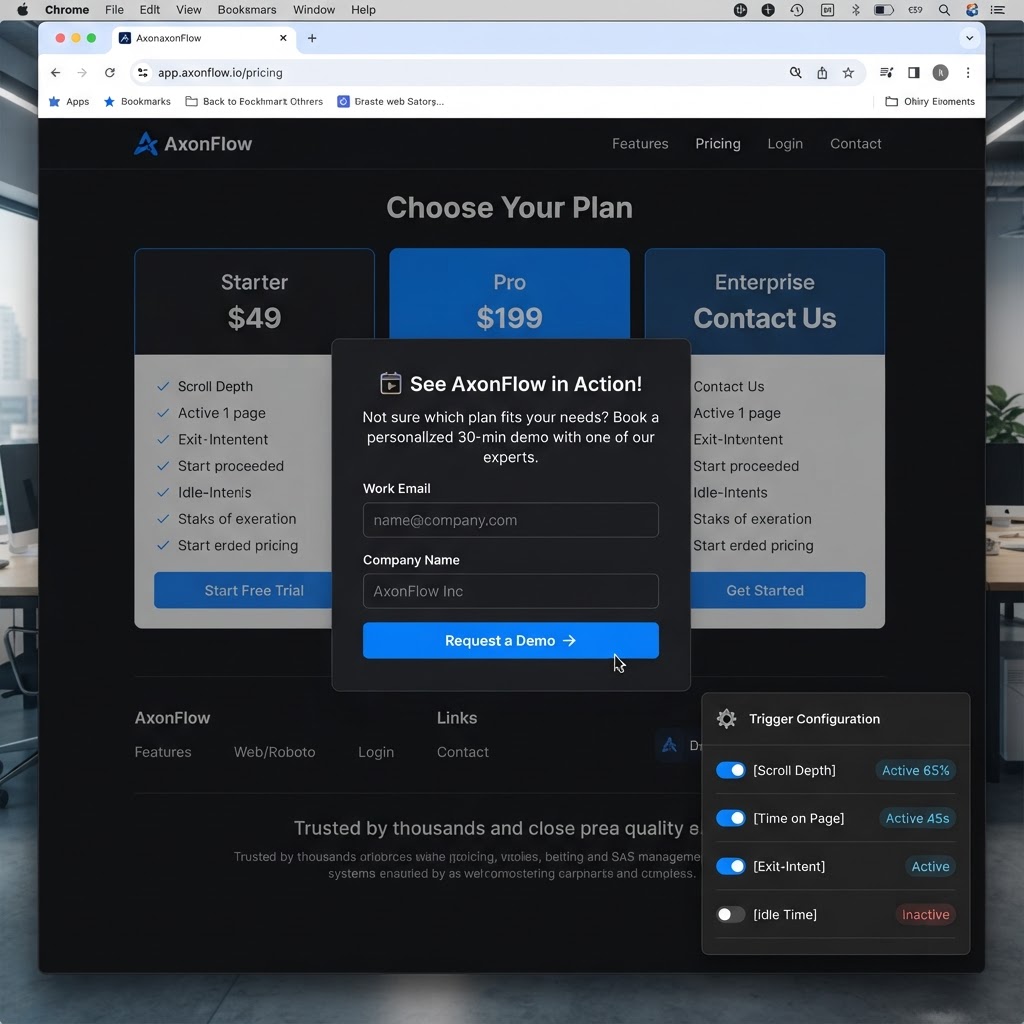
Scroll depth is one of the most reliable engagement signals — a visitor who scrolls past 50% of a pricing page has shown real intent, unlike one who bounces after two seconds. Time-on-page works similarly but should be tuned per page type: 8–10 seconds might indicate genuine interest on a blog post, while the same threshold on a demo-request page suggests hesitation worth addressing. Page depth — how many pages a visitor has viewed in a session — signals a warmer prospect than a single-page bounce, regardless of time spent. Exit-intent, tracked via mouse movement toward the browser's close or back button, remains one of the highest-converting triggers for capturing visitors who are about to leave without converting.
Layering Identification on Top of Behavior
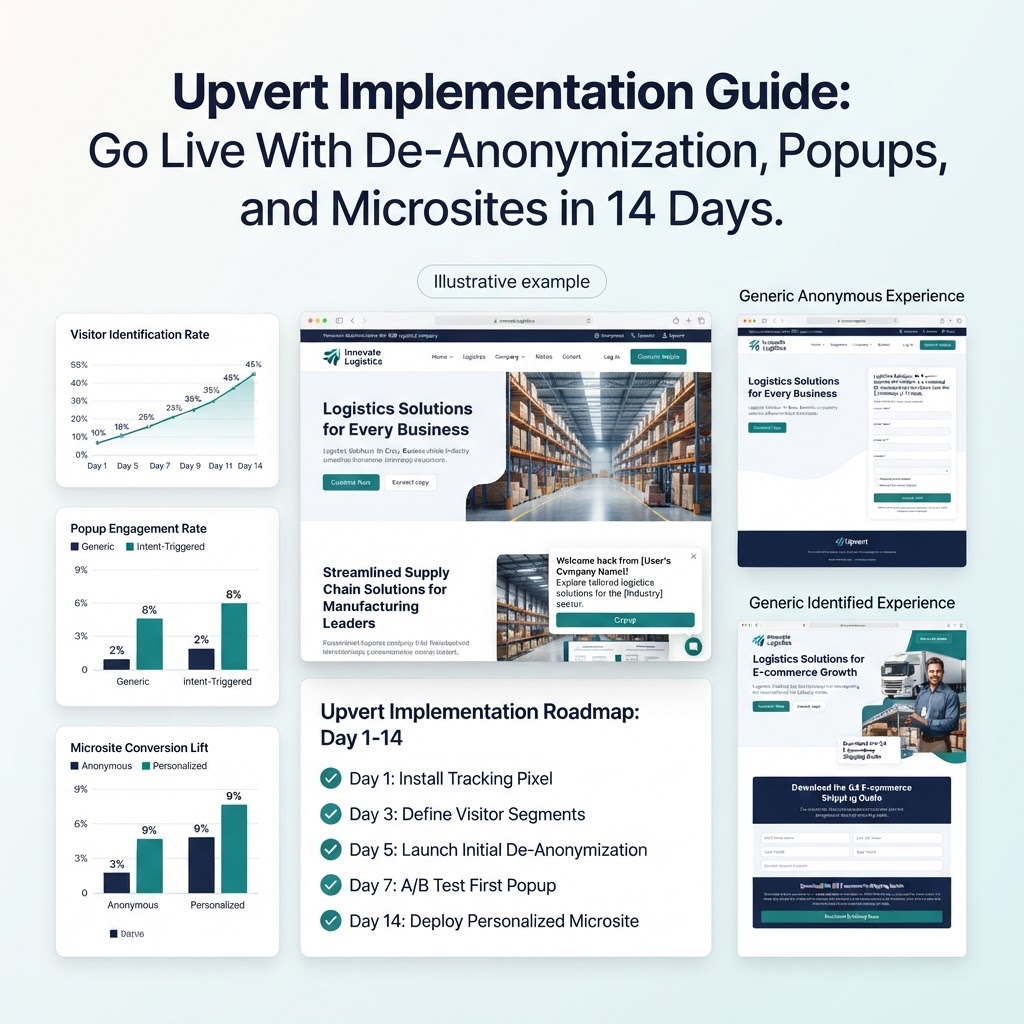
Behavioral triggers answer "is this visitor engaged?" De-anonymization answers "who is this visitor?" — and combining the two is where intent-triggered popups become materially more effective than generic ones. A popup that fires based on scroll depth alone might say "Questions? Chat with us." The same trigger, layered with account-tier targeting, can instead say "Hi [Company Name] — see how teams like yours use Upvert," referencing the account's industry or even a competitor they're likely evaluating.
Account-Tier Targeting in Practice
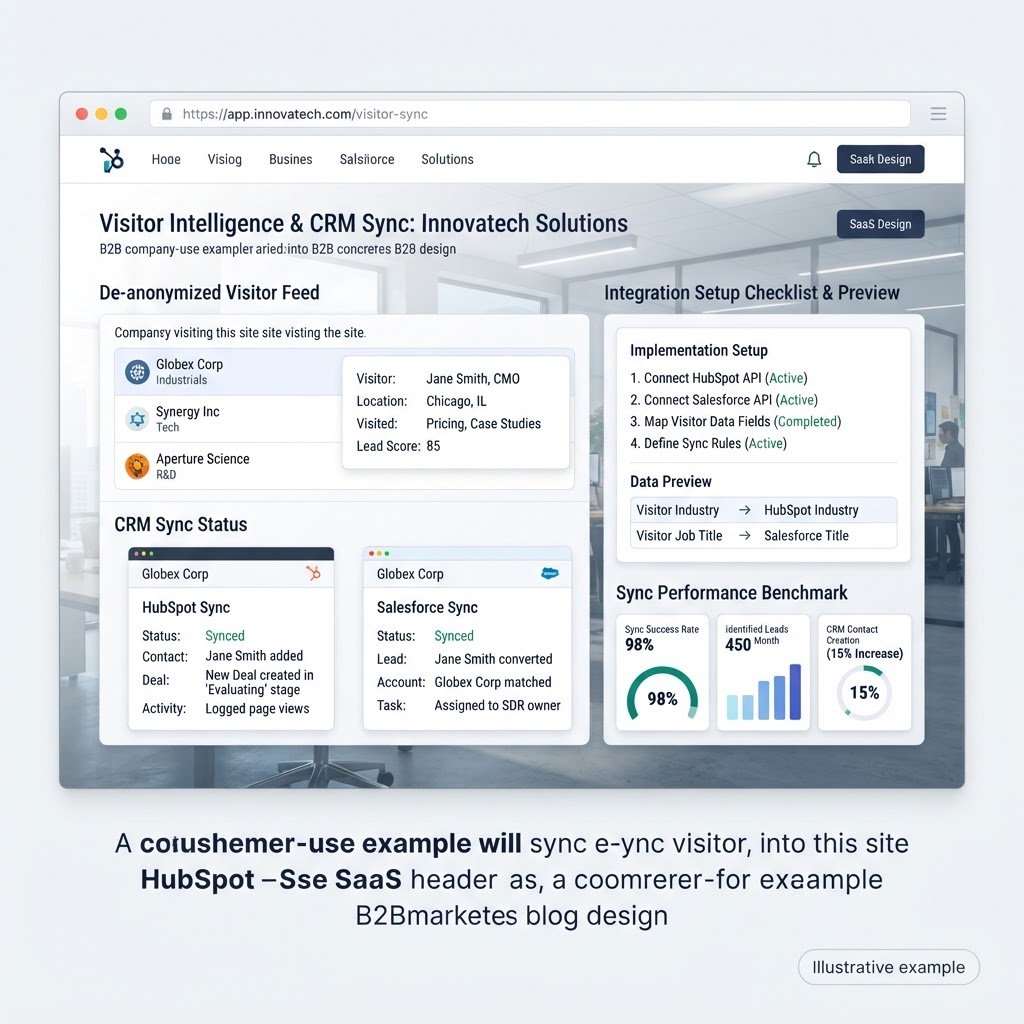
Account-tier targeting segments popup logic by deal size or ICP fit rather than treating all traffic identically. A Tier 1 target account (say, a named ABM target) hitting your pricing page after being identified might trigger an immediate, high-touch popup offering a personalized demo. A Tier 3 visitor with no account match showing the same behavior might instead see a lighter-weight content offer. This tiering typically pulls from CRM data synced via HubSpot or Salesforce integrations, so popup logic reflects actual pipeline priorities rather than generic visitor behavior.
Frequency Capping and Suppression Logic
Well-built trigger systems also need suppression rules: don't show the same popup twice in a session, don't show a demo-request popup to someone who already submitted the form, and cap total popup exposure per visitor per week. Without these guardrails, even well-targeted popups degrade into the same fatigue that gave the format its reputation problem in the first place.
What Drives Conversion Lift in Practice
Data from B2B implementations shows combining behavioral triggers with identity-based targeting drives 15–22% higher conversion versus time-based popups shown to all traffic uniformly. The lift comes almost entirely from relevance: the same offer, shown to the right visitor at the right moment in their session, converts multiples better than a generic offer shown to everyone at a fixed interval.
What's the difference between exit-intent and scroll-triggered popups?
Exit-intent detects mouse movement suggesting a visitor is about to leave the page or tab, while scroll-triggered popups fire based on how far down a page the visitor has read — both are behavioral, but they capture different moments in the session.
Do triggered popups need visitor identification to work?
No, behavioral triggers work on anonymous traffic. Identification adds a second layer that lets the same trigger produce a more personalized message for known accounts.
How many popup triggers should a page have?
Most effective implementations use one primary trigger per page (commonly exit-intent or scroll depth) with suppression logic to prevent overlapping or repeat popups in the same session.
Can popup triggers be different for PLG versus ABM motions?
Yes. PLG teams often weight behavioral signals like feature usage and page depth more heavily, while ABM teams weight account-tier and identification data more heavily to prioritize named targets.
What conversion lift is realistic from intent-triggered popups?
B2B implementations combining behavioral and identity-based targeting commonly report 15–22% conversion lift compared to static, time-based popups shown uniformly to all traffic.
Want to see intent-triggered popups configured for your own trigger logic? Book a demo or explore the full Smart Popups product page.