2026 Popup Trigger Benchmark: Which Triggers Convert Best for B2B Websites
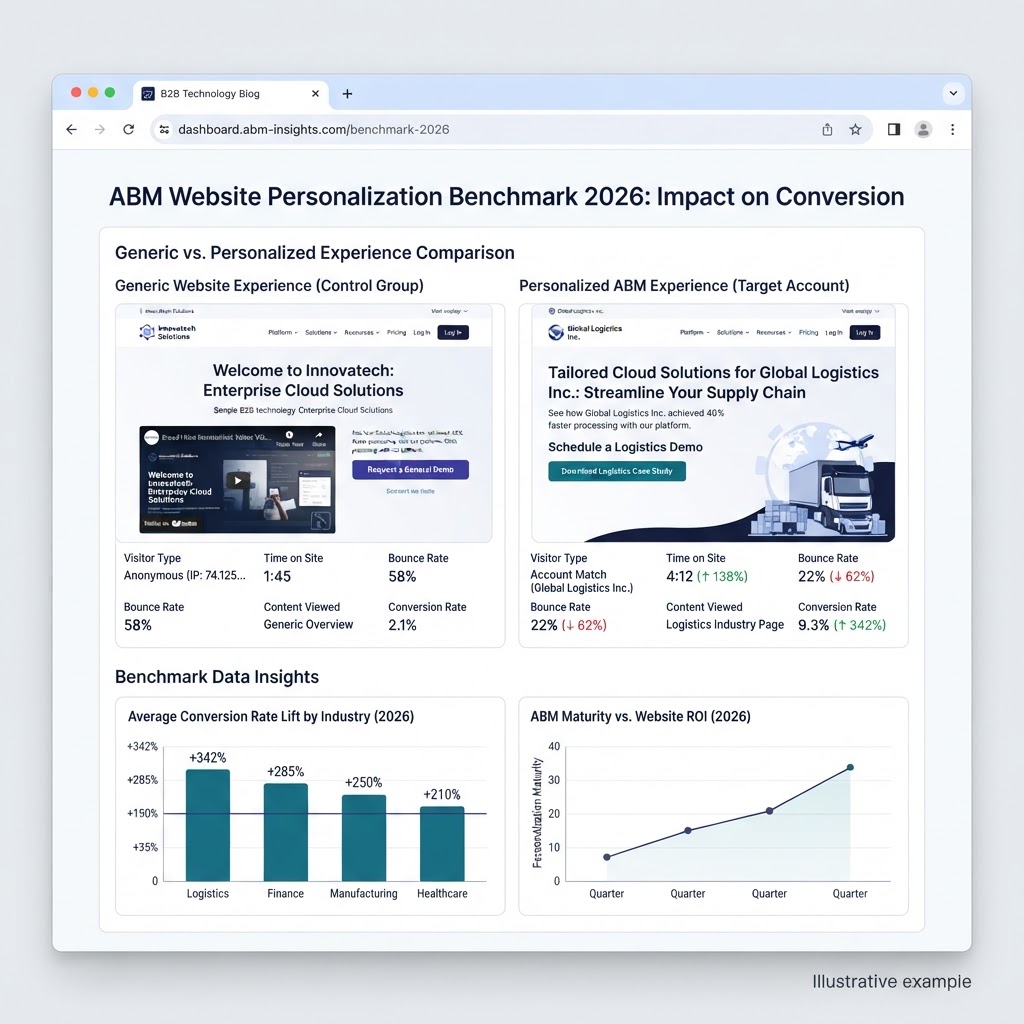
Generic B2B popups shown to every visitor on a fixed timer convert at roughly 1-2% in 2026, while popups triggered by exit intent, scroll depth, returning-visitor status, or de-anonymized account fit convert at 4-5%+ — three to four times better. The gap isn't about popup design. It's about whether the trigger reflects real visitor intent or fires blindly at everyone.
The Baseline: Generic, Untargeted Popups
The most common popup implementation is still a timer: show a popup to every visitor after 8-10 seconds, regardless of who they are or what they're doing. This is the easiest to set up and the worst-performing — industry benchmarks consistently place generic popup conversion around 1-2%, dragged down by showing the same offer to visitors who have no relevant intent yet.
Trigger-by-Trigger Performance
Exit-Intent Triggers
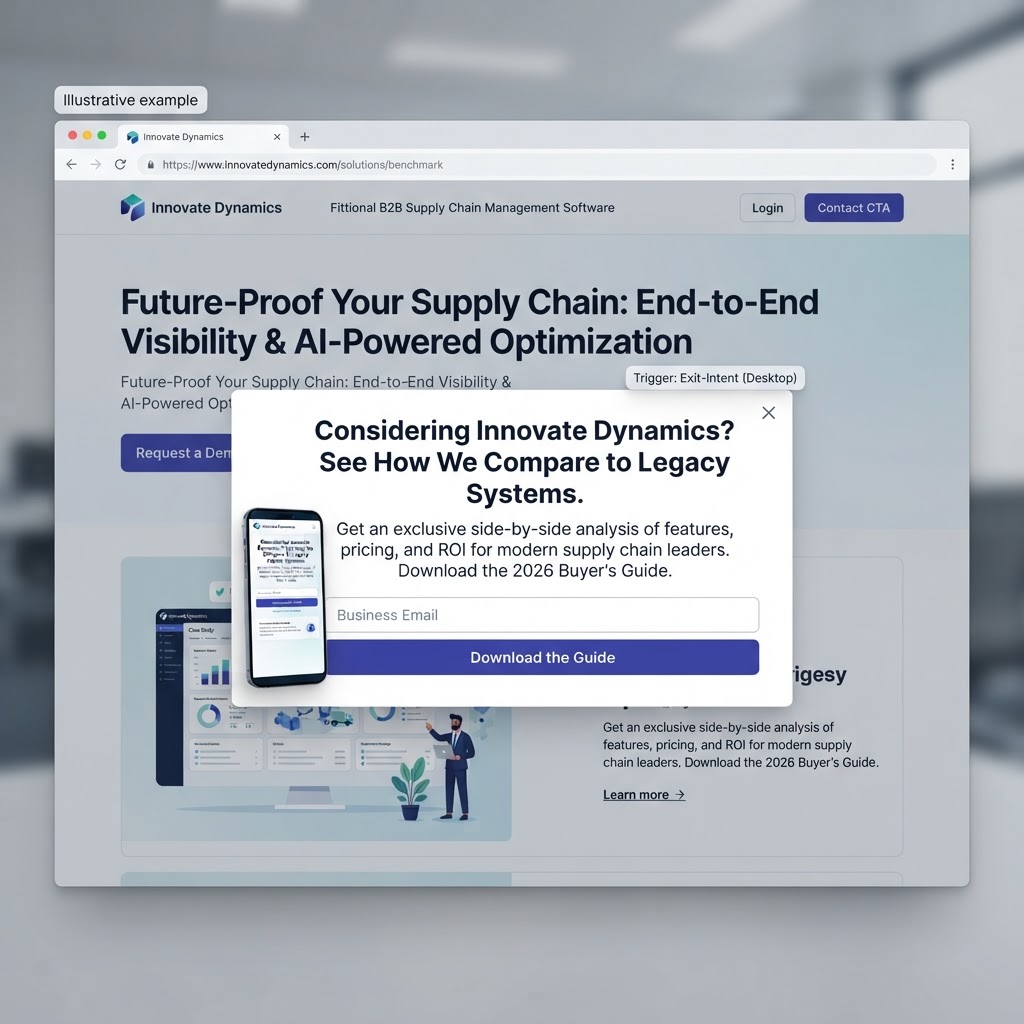
Firing when cursor movement signals a visitor is about to leave the page (typically moving toward the browser's tab or close button) catches visitors at a decision point rather than mid-read. Exit-intent popups routinely outperform timer-based popups because they interrupt at the moment of highest risk of losing the visitor entirely, rather than interrupting an engaged read.
Scroll-Depth Triggers
Waiting until a visitor has scrolled 50-75% through a page filters out immediate bounces and targets visitors who've demonstrated real engagement with the content. Scroll-depth triggers consistently outperform fixed-timer triggers because the popup only appears once interest is already established.
Time-on-Page Triggers
Similar logic to scroll depth: a visitor who has spent 45-90 seconds on a page is more engaged than one who arrived seconds ago. Time-on-page triggers work best combined with scroll depth rather than alone, since a slow scroller and a distracted tab-switcher can log the same dwell time for different reasons.
Returning-Visitor and Account-Tier Triggers
A visitor on their second or third session, or one matched via website de-anonymization to a known target account, has already shown intent that a first-time anonymous visitor hasn't. Popups targeted at returning visitors or ICP-fit accounts consistently land at the top of the performance range, often reaching 4-5%+ conversion because the offer is being shown to visitors who are more likely to act on it.
Why Stacking Triggers Performs Best
The strongest results come from combining triggers rather than relying on one. A popup that fires on scroll depth and only for visitors de-anonymized as belonging to a target account outperforms either trigger alone, because it filters for both engagement and fit simultaneously. This is the logic behind Upvert's Smart Popups, which combine real-time behavioral signals — page depth, time-on-page, exit intent, returning-account status — with de-anonymized ICP data so a popup only fires when both the behavior and the account are worth interrupting for.
What This Means for Popup Strategy
Teams still running a single, generic, timer-based popup across their entire site are leaving conversion on the table relative to what trigger-based targeting delivers. The fix isn't more popups — it's fewer, better-targeted ones: replace one blanket popup with a small set of triggers matched to specific visitor states (new vs. returning, engaged vs. skimming, ICP-fit vs. not).
Frequently Asked Questions
What's the average B2B popup conversion rate in 2026?
Generic, untargeted popups shown to all visitors typically convert around 1-2%. Popups triggered by specific behavioral or identity signals convert at 4-5%+.
Which popup trigger converts best?
No single trigger wins universally, but combining multiple signals — such as scroll depth plus de-anonymized account-tier match — produces the strongest results, since it filters for both engagement and audience fit.
What scroll depth should trigger a popup?
Common benchmarks use 50-75% scroll depth as the point where a visitor has shown real engagement rather than an immediate bounce.
Do returning visitors convert better on popups than first-time visitors?
Yes. Returning visitors and de-anonymized target accounts have already shown intent, so popups targeted at them typically outperform popups shown to first-time, anonymous traffic.
Is exit-intent or scroll-depth targeting better?
Both outperform generic timer-based popups; exit-intent catches visitors at the moment of highest abandonment risk, while scroll-depth catches visitors already showing engagement. Many teams use both for different pages.
See how trigger-based popups perform on your own traffic. Start free or book a demo of Upvert's Smart Popups.