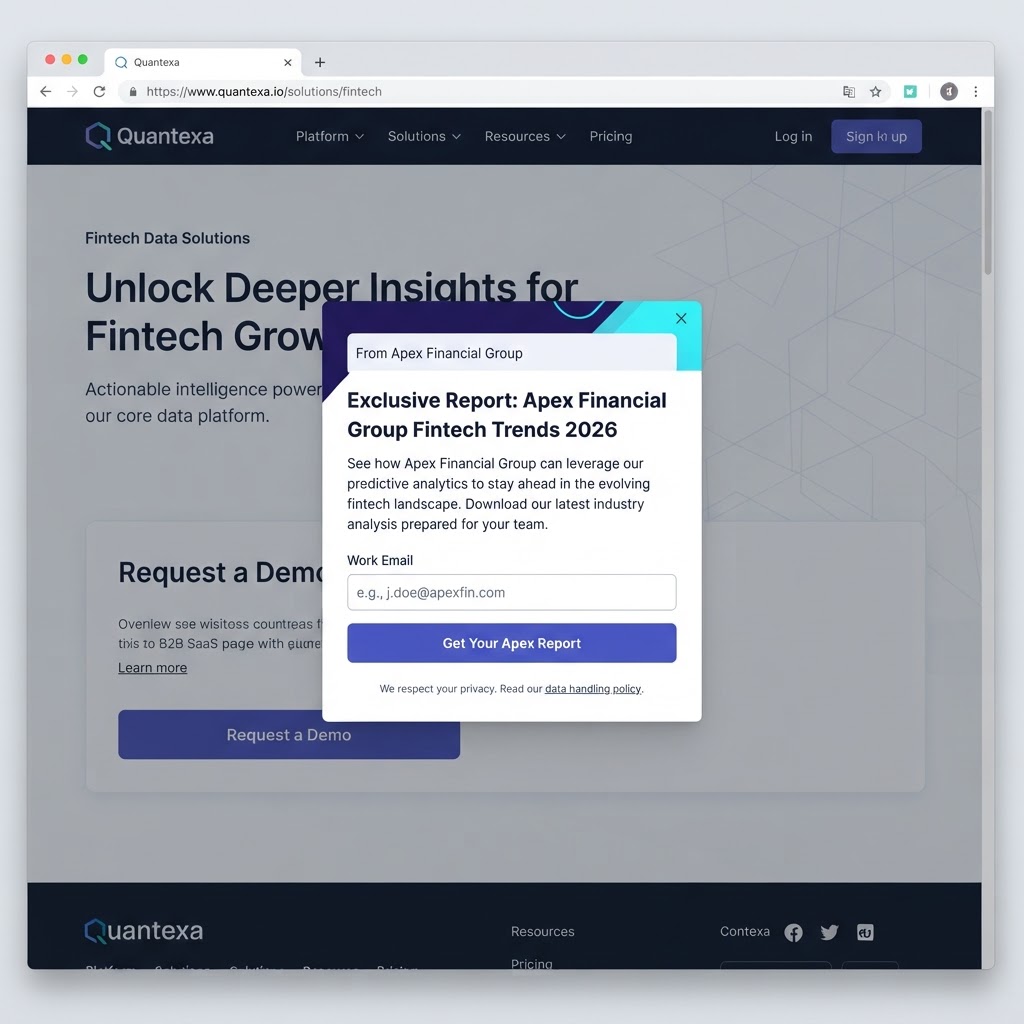
Intent-Triggered Popups for Partner and Channel Programs: Recruiting Agencies, Resellers and Integrators From Your Own Website
Short answer: Agencies, consultancies, resellers and systems integrators research your product on your website long before they apply to your partner program, and most never fill out a partner form. Intent-triggered popups use website de-anonymization to recognize when a visiting company looks like a partner rather than an end customer, then show a partner-specific invitation on the pages they read. The result is more applications from the right firms without cluttering the experience for direct buyers.
Why Partners Deserve Their Own Website Motion
Channel partners shape B2B purchases more than most vendors measure. In 6sense's 2026 B2B Buyer Experience Report, among buyers who engaged distributors, resellers or systems integrators, 41.5% interacted with those partners as much as with the vendor and another 22% interacted with them more, yet 80% still bought directly from the vendor. Partners influence the shortlist even when they do not own the transaction.
That makes partner recruitment a demand-generation lever. A marketing agency that standardizes on your tool can bring it into many client evaluations. Yet most partner programs rely on a single “Become a Partner” page that few of the right firms ever find.
How to Recognize a Partner Visitor
Website de-anonymization identifies the visiting company using IP-to-company matching and reverse DNS, with person-level identification where available. Firmographics and behavior then indicate whether it is a likely customer or a likely partner:
- Industry: marketing and advertising agencies, IT services firms, managed service providers, consultancies and software resellers.
- Page path: integrations, API documentation, agency pricing and multi-site or multi-account features.
- Behavior: repeat visits over several weeks from the same firm, often by different people.
- Source: referrals from partner directories, marketplace listings or integration partners' sites.
Four Popup Recipes
1. Agency on the integrations page
Audience: industry is marketing agency and page is integrations. Offer: “Running this stack for clients? Join our agency program for partner pricing and co-marketing.” CTA: apply, or book a 15-minute partner call.
2. IT services firm reading API docs
Audience: IT services or MSP with two or more docs pages in a session. Offer: an invitation to technical certification or a sandbox account.
3. Consultancy returning to pricing
Audience: consulting firm on its third pricing visit in 30 days. Offer: an ungated overview of referral or reseller margins.
4. Existing customer that is actually an agency
Audience: logged-in customers whose CRM industry is agency and who manage more than one site. Offer: an in-app message about multi-client plans and partner benefits.
Keep Partner and Customer Experiences Separate
The same visitor should never see both a partner invitation and a demo push. Make audiences mutually exclusive: ICP end-customer firmographics get buying offers, partner firmographics get program offers, and unknown visitors get your default experience. Suppress partner popups in checkout and onboarding flows, and cap them at one prompt per company per week.
Route Partner Intent to the Right Owner
Partner signals usually belong to a partner or alliances manager, not an SDR. Send identified partner-type accounts to a dedicated Slack channel and tag them in HubSpot with a partner-prospect property so they enter a separate sequence. For agencies, a personalized microsite showing client-management features, partner pricing and a few agency success examples tends to outperform a generic program page.
Metrics to Track
- Partner-type companies identified per month
- Popup-to-application rate by recipe
- Application-to-active-partner rate
- Partner-sourced and partner-influenced pipeline over the following two quarters
Upvert supports this motion with Smart Popups, AI custom landing pages and in-app guides in one script, plus an Agencies and Scaling Teams plan for firms managing multiple client sites (see pricing). Related reading: Personalized Microsites for B2B Marketing Agencies and How Intent-Triggered Popups Actually Fire.
Frequently Asked Questions
Can popups be used to recruit channel partners?
Yes. Combined with website de-anonymization, popups can target visitors from agencies, consultancies, resellers or IT services firms with a partner-program invitation instead of a buying offer.
How do you tell a partner visitor from a customer?
Use firmographics such as industry and company type, plus behavior like visits to integrations, API docs or agency pricing pages, and referrals from partner directories.
Will partner popups annoy direct buyers?
Not if audiences are mutually exclusive. End-customer ICP accounts see buying offers, partner-type firms see program offers, and frequency caps limit repetition.
Do channel partners really influence B2B purchases?
Yes. 6sense's 2026 report found that most buyers who engaged resellers or integrators interacted with them at least as much as with the vendor, even though 80% bought directly.
Turn your website into a partner recruiting channel. Start a 14-day free trial of Upvert.