How a Vertical SaaS Company Used Personalized Microsites to Win More Enterprise RFPs
A vertical SaaS company selling into a competitive enterprise procurement process started attaching account-specific personalized microsites to every RFP response and expanded its late-stage win rate meaningfully within two sales cycles. Instead of sending evaluators to the same static homepage every competitor used, prospects landed on a page built around their own industry, their own stated priorities, and case studies from companies they recognized.
The Problem: Every Evaluator Saw the Same Generic Homepage
Enterprise RFPs typically ask for a "product overview" link alongside written responses. This company's sales team had been sending every evaluator — whether they were in healthcare, logistics, or financial services — to the same generic homepage. It technically answered the question, but it did nothing to differentiate the company from competitors doing the exact same thing. Deal reviews kept surfacing the same feedback from lost RFPs: "the evaluators didn't feel like we understood their specific business."
The Fix: A Microsite Built for Every Named Account
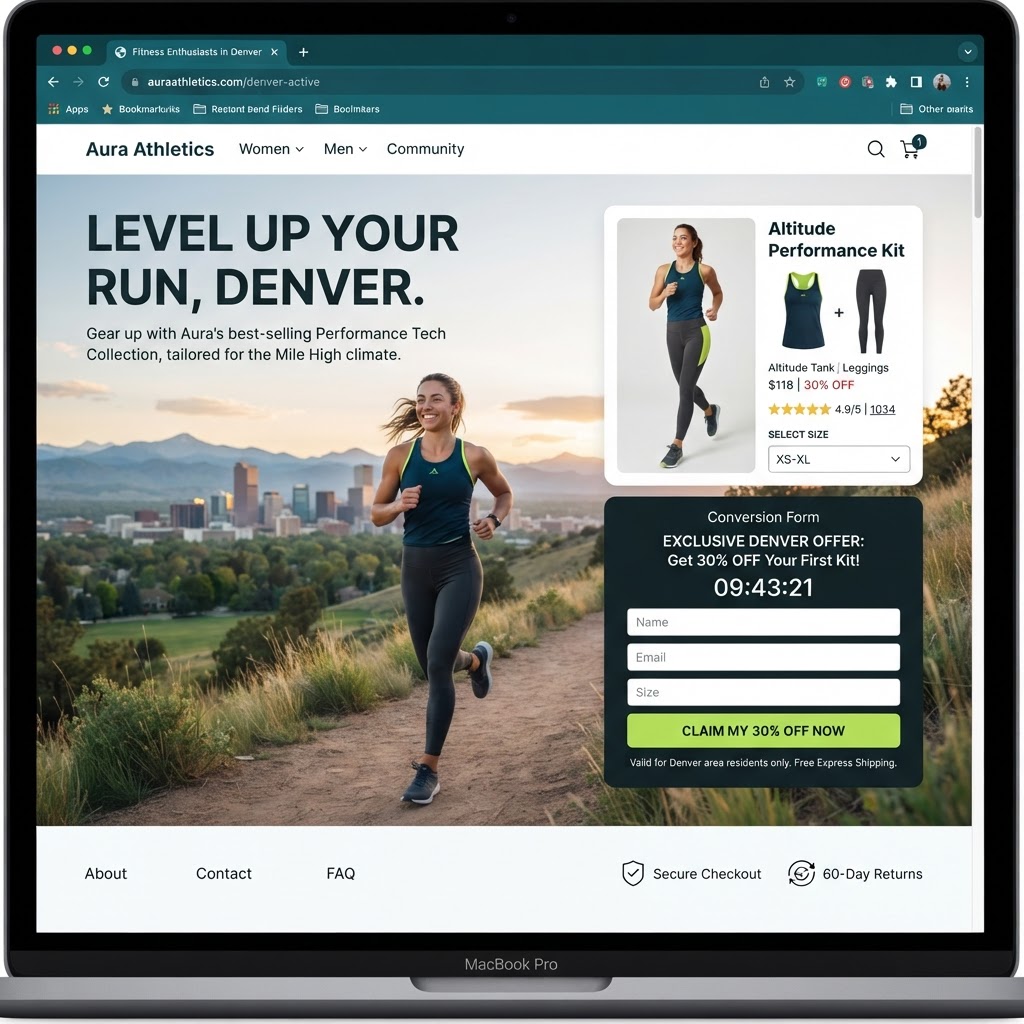
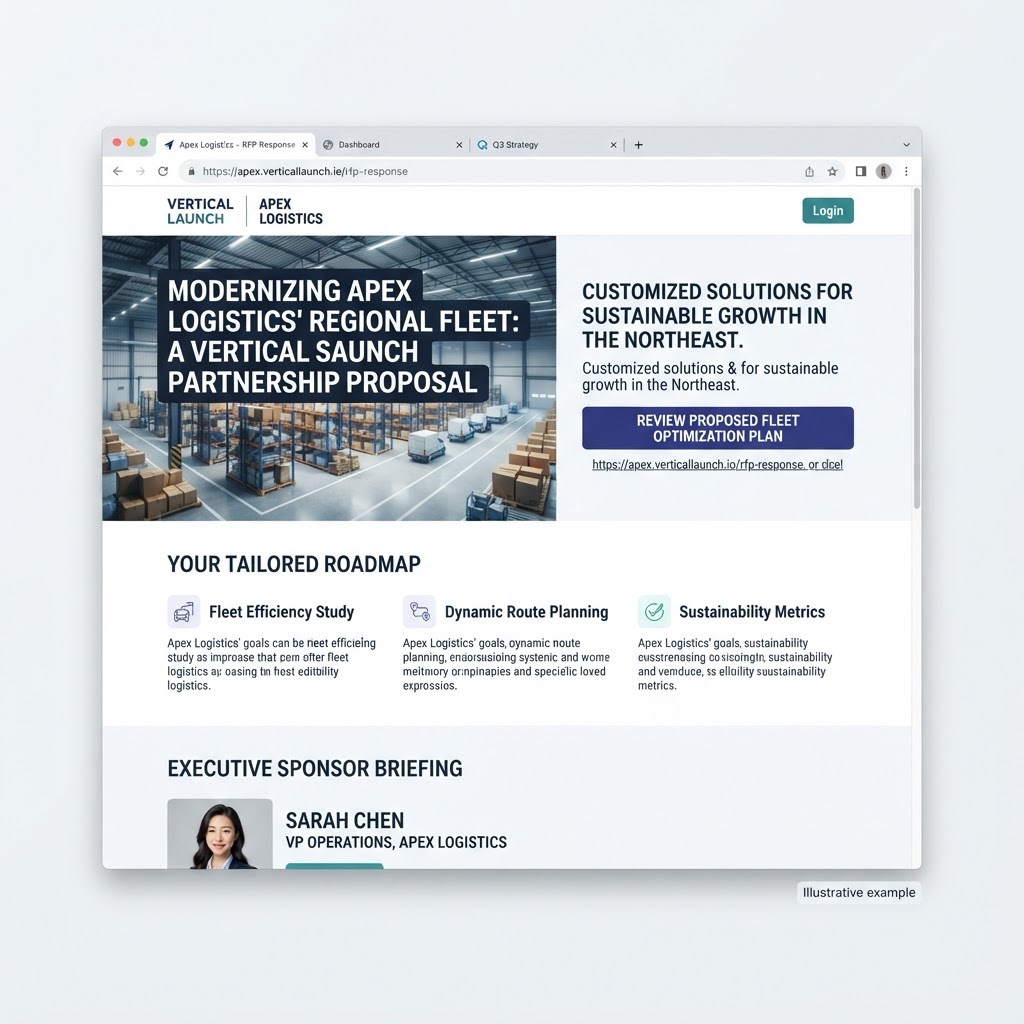
Using Upvert, the revenue team built a microsite template that pulled in the target account's name, industry, and logo automatically, then swapped in relevant case studies, ROI stats, and testimonials matched to that vertical. A healthcare enterprise evaluator would land on a page referencing other healthcare customers and HIPAA-relevant compliance messaging. A logistics evaluator saw supply chain case studies and uptime guarantees relevant to fleet operations. The core product messaging stayed consistent — only the proof points and framing changed per account.
Each microsite also included a short, personalized video message from the account executive, embedded directly on the page, along with a calendar link scoped to that specific deal team rather than a generic "contact us" form.
How It Fit Into the RFP Workflow
Instead of treating the microsite as a one-time send, the team linked to it from the written RFP response, referenced it again in the follow-up email after the vendor demo, and updated it as the deal progressed — adding a pricing comparison section once the deal reached final-round negotiation. Because the page lived at a unique URL, sales could also see in their analytics dashboard which stakeholders at the buying committee had actually opened it and how far they scrolled, giving reps a read on internal champion engagement that a static PDF never could.
The Results
Deals that included a personalized microsite in the RFP process outperformed those that didn't, both in response rate to sales follow-ups and in late-stage win rate. This lines up with the broader pattern Upvert sees across its customer base: personalized pages convert up to 80% higher than generic ones, and the visibility into stakeholder engagement gave the sales team an early signal on which RFPs were worth prioritizing effort against.
What Other B2B Teams Can Take From This
RFP processes are inherently commoditized — every vendor is answering the same questions in roughly the same format. A personalized microsite is one of the few RFP assets that's structurally hard for a competitor relying on generic collateral to replicate at scale, because it requires building a page-per-account rather than reusing the same deck. Teams don't need to personalize every element; swapping in vertical-relevant case studies, industry-specific proof points, and a named point of contact is usually enough to signal that a vendor actually understands the buyer's world.
Learn more about how Upvert's personalized microsites work, or see how the approach applies to a different vertical in ABM website personalization for enterprise sales teams.
Frequently Asked Questions
What is a personalized microsite in the context of enterprise sales?
A personalized microsite is a standalone landing page automatically generated for a specific account or segment, featuring that company's name, industry, relevant case studies, and messaging tailored to their evaluation criteria — often shared as part of an RFP response or late-stage sales process.
How is a personalized microsite different from a generic landing page?
A generic landing page shows the same content to every visitor. A personalized microsite dynamically swaps headlines, proof points, logos, and CTAs based on who is viewing it, which is why personalized pages convert up to 80% higher than static ones.
Can microsites be built without engineering resources?
Yes. Upvert's microsites are built and customized through a no-code interface, letting marketing and sales teams launch account-specific pages by segment, industry, or named account without pulling in a dev team.
How long does it take to launch a personalized microsite?
Teams typically launch their first personalized microsite within a day of setup, and can spin up new account-specific variants in minutes once a template and personalization rules are in place.
Do personalized microsites work for RFP and procurement processes?
Yes. Because microsites can be built per named account, they work well as a supplementary asset in RFP responses — giving evaluators a page that speaks directly to their industry and use case instead of a generic company overview.
Ready to build your first account-specific microsite? Book a demo or start your 14-day free trial of Upvert.