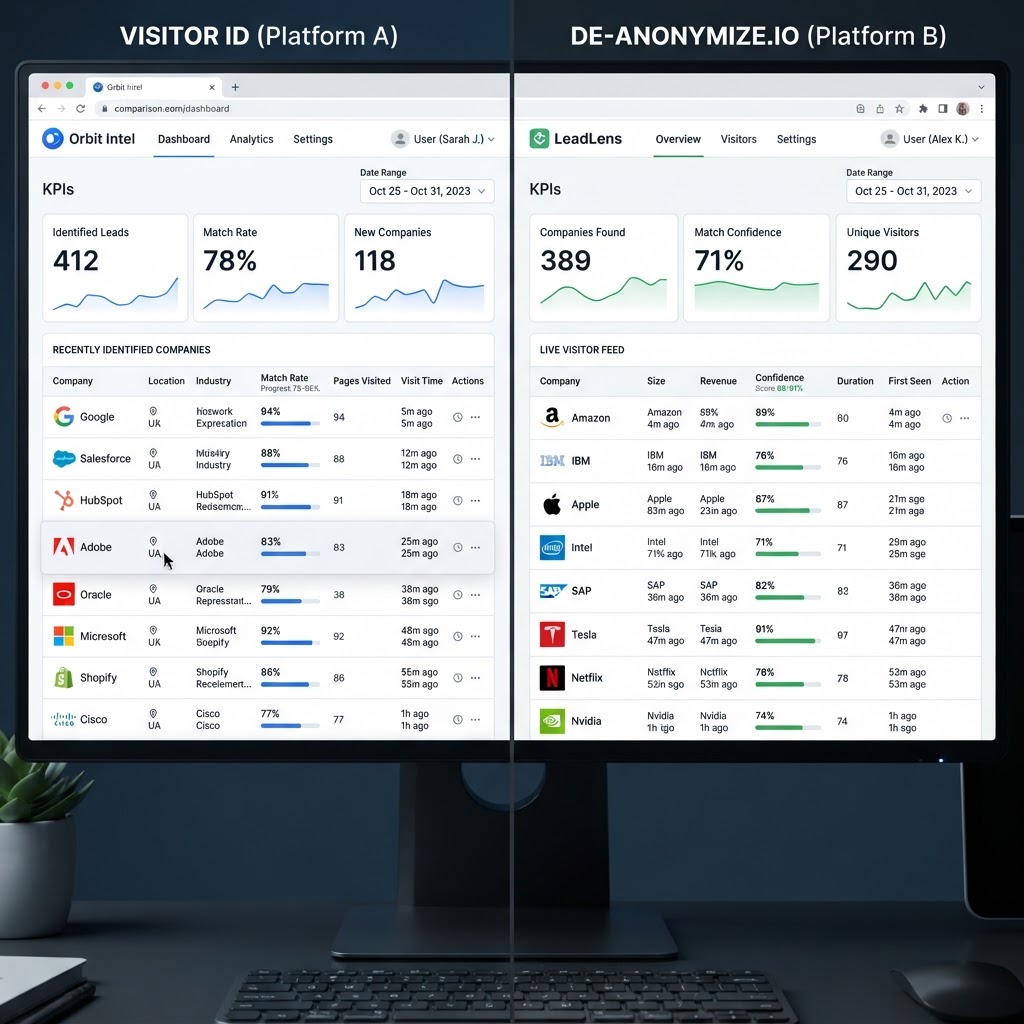
Website De-Anonymization for Commercial Real Estate & PropTech Companies
Website de-anonymization identifies the companies browsing a commercial real estate or PropTech website — a firm researching a listing, a REIT evaluating a property management platform — even when they never fill out a form, giving brokerage and sales teams a warm lead instead of an anonymous bounce. For an industry where deal cycles are long and a single missed inquiry can mean a lost multimillion-dollar lease or contract, knowing who is already interested is a meaningful edge.
Why Anonymous Traffic Is a Bigger Problem in CRE and PropTech
Commercial real estate and PropTech buying decisions rarely happen on the first visit. A tenant rep, an investment analyst, or a property operations lead might browse a listing page or a PropTech vendor's product tour multiple times over weeks before ever reaching out — and most of them never fill out a "request info" form at all. Industry-wide, the vast majority of B2B website visitors leave without converting, and CRE's long, high-stakes deal cycles make that gap especially costly: the firm quietly comparing three buildings, or the operations team evaluating two maintenance platforms, disappears from view entirely under a traditional analytics setup.
How De-Anonymization Works for CRE and PropTech Sites
Website de-anonymization matches a visitor's IP address and browsing session to a company record in real time, using reverse DNS and identity-resolution partners — Upvert's de-anonymization is powered by Warmly.ai — to surface the company name, industry, and size behind an otherwise anonymous session. For a brokerage site, that means seeing that a specific investment firm spent eight minutes on a listing's financial summary page. For a PropTech vendor, it means flagging when a target property management company hits the pricing page for the third time this month.
That identification feeds directly into two other pieces of the same platform: a personalized microsite that can greet a known firm with messaging relevant to their portfolio type (multifamily, industrial, office), and a Smart Popup that can trigger a "Talk to a broker" or "See a live demo" offer specifically for identified target accounts, rather than showing every visitor the same static contact form.
Practical Use Cases
Brokerages can route identified firm visits directly to the agent already working that account, turning a silent second or third visit into a same-day follow-up call instead of a missed signal. PropTech vendors selling into property management, REITs, or facilities operations can flag when named target accounts revisit product or pricing pages, giving sales a real-time nudge instead of waiting for an inbound demo request. Portfolio and asset management platforms can identify which institutional investors are quietly researching competitor comparisons, informing which relationships deserve proactive outreach.
What This Means for Pipeline
Across Upvert's customer base, pairing de-anonymization with timely follow-up typically produces 2–3x better connect rates than cold outbound, because the outreach starts from a real signal of interest rather than a cold list. For CRE and PropTech specifically, where a single enterprise account or institutional relationship can be worth an outsized share of annual revenue, even identifying a handful of additional in-market firms per month can materially change pipeline.
See how the same approach applies to other verticals with long consideration cycles in website de-anonymization for manufacturing and industrial B2B companies, or explore Upvert's website de-anonymization directly.
Frequently Asked Questions
How does website de-anonymization help commercial real estate and PropTech companies?
It identifies the companies browsing listings, portfolio pages, or product pages before they ever fill out a form, letting brokerage and PropTech marketing and sales teams follow up on high-intent visitors — like a firm researching a specific building or market — while interest is still active.
What kinds of visitors can be identified on a commercial real estate website?
De-anonymization identifies the visiting company and, with additional signals, individual contacts at that company — so a brokerage can see that a specific investment firm or tenant prospect viewed a listing, not just an anonymous session.
Can PropTech companies use de-anonymization to prioritize enterprise leads?
Yes. PropTech vendors selling into property management or REIT accounts can use de-anonymization to flag when a target account visits pricing or demo-request pages, routing that signal to sales before a form is ever submitted.
Is website de-anonymization compliant for real estate and PropTech use cases?
Upvert's de-anonymization identifies companies through business IP-to-firmographic matching rather than tracking individual consumers, and is built to align with GDPR and standard B2B privacy practices — always confirm specifics with your legal and compliance team for your jurisdiction.
How quickly can a commercial real estate firm start identifying visitors?
Setup takes about five minutes with a single script tag, after which identified companies typically begin appearing in the dashboard within the same day.
See which firms and institutional accounts are already browsing your listings or product pages. Book a demo or start a 14-day free trial of Upvert.