Website De-Anonymization for Manufacturing & Industrial B2B Companies
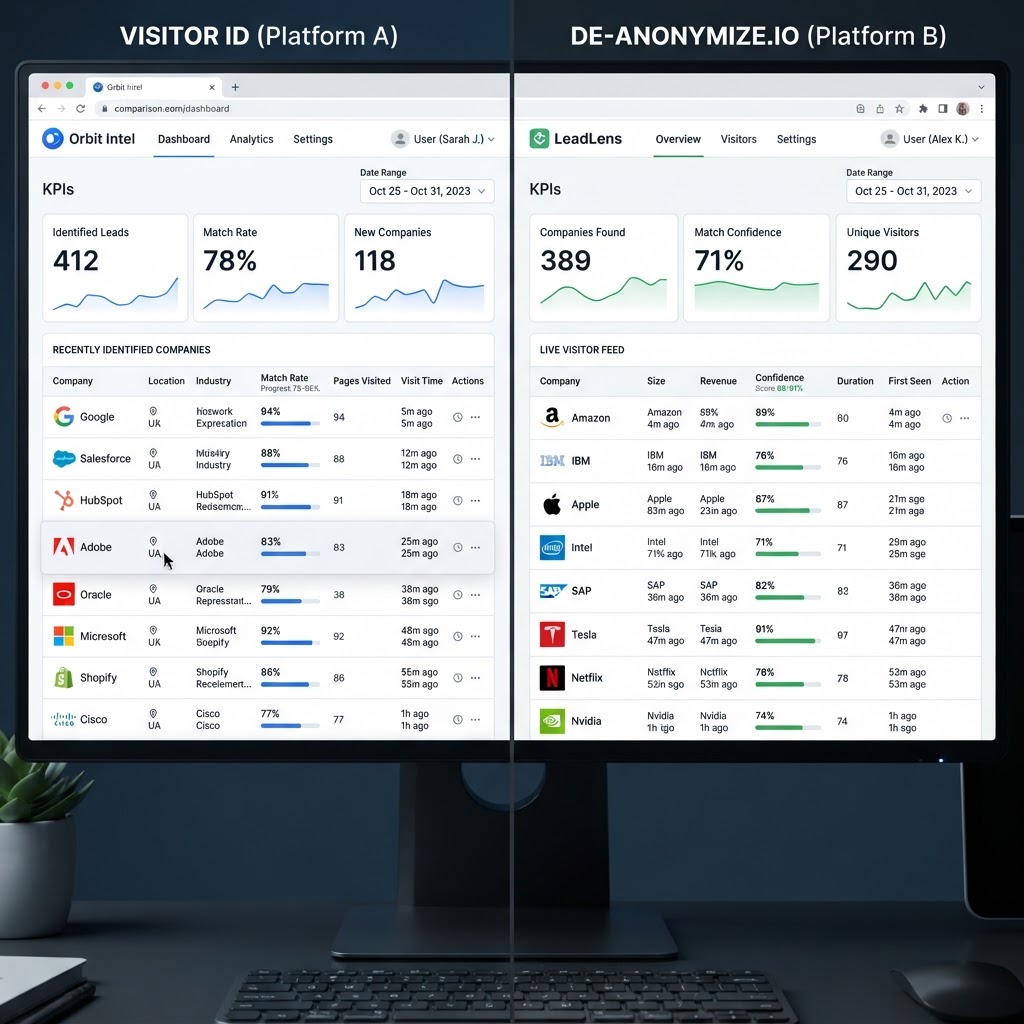
Quick answer: Manufacturing and industrial buyers — engineers, plant managers, procurement leads — typically research suppliers, spec sheets, and capacity data for weeks or months before ever submitting an RFQ or contact form. Website de-anonymization identifies the company (and often the named contact) behind that anonymous research activity by matching IP addresses and browsing behavior to firmographic data, giving sales and marketing teams visibility into the buying committee long before a lead form is filled out.
Why Industrial Buying Cycles Hide Your Best Leads
Industrial procurement rarely starts with a form fill. An engineer evaluating a new component supplier might spend 20 minutes on your spec pages, compare three competitors, loop in a plant manager, and only reach out six weeks later — if a form ever gets submitted at all. Marketo's widely-cited benchmark puts the anonymous share of B2B website traffic as high as 98%, meaning nearly all of that early-stage research is invisible to a typical analytics stack. In manufacturing, where deal cycles already run 6–18 months, losing visibility into the first several weeks of research is a significant blind spot.
How De-Anonymization Works
Website de-anonymization matches a visitor's IP address against company-level firmographic databases and identity-resolution partners — Upvert's de-anonymization is powered by Warmly.ai — to surface the organization behind an otherwise anonymous session. Independent industry benchmarks put realistic company-level match rates in the 30–65% range on well-matched B2B traffic (person-level identification is harder and typically lands between 5–25%), so treat any vendor claiming near-100% match rates with skepticism. For manufacturing sites with strong organic and trade-show-driven traffic, this typically means identifying which distributors, OEMs, and industrial buyers are actively evaluating your catalog, capacity, or certifications.
What Manufacturing Teams Do With This Data
Once an account is identified, teams commonly take three actions: trigger an intent-triggered popup offering a spec sheet download or capacity calculator when an identified account views a product page; route the account directly to sales development if it matches a target account list, cutting the typical lead-to-outreach delay from days to hours; and serve a personalized microsite with relevant certifications (ISO, AS9100) and case studies for that buyer's specific vertical, whether that's automotive, aerospace, or industrial equipment.
A Practical Rollout for Manufacturing Sites
Start by identifying your top target accounts and distributor partners, then set de-anonymization alerts for when those specific companies visit high-intent pages like spec sheets, pricing, or RFQ forms. Layer in a popup that offers a direct line to a sales engineer for identified accounts spending more than a set threshold of time on technical pages. Most manufacturing teams see this live within a week of implementation, without engineering involvement.
Frequently Asked Questions
How accurate is website de-anonymization for industrial B2B sites?
Realistic company-level match rates run 30–65% on B2B traffic industry-wide, with person-level identification typically in the 5–25% range. Accuracy depends heavily on traffic quality and the mix of corporate versus residential or mobile IPs common on manufacturing sites.
Can de-anonymization identify visitors from a corporate VPN or shared plant network?
Yes, in most cases — de-anonymization matches at the company level using the visiting IP block, which typically still resolves correctly even when many employees share a corporate or plant network connection.
How long does implementation take for a manufacturing website?
Most teams add the Upvert tracking snippet and begin identifying accounts within a day, with popup and microsite campaigns layered on top within the first week.
Does de-anonymization work alongside our existing CRM?
Yes. Identified accounts and engagement data sync to HubSpot natively, and to Salesforce, Outreach, and Apollo via webhooks, so sales sees de-anonymized activity alongside existing account records.
See which accounts are already researching your products — book a demo of Upvert's website de-anonymization.